
- How to Measure Ring Size at Home (Without Guessing) - March 19, 2026
- Best Places to Buy Loose Diamonds Online - February 16, 2026
- How to Choose a Lab-Grown Diamond Engagement Ring - February 7, 2026
One of the major financial decisions a couple makes together is choosing an engagement ring. It is one of those things where emotions and logic are constantly at war, and honestly? Both sides have valid points.
I have been in the diamond world my entire life. Jewelry is a family business, so I grew up running around my father’s atelier, overhearing what makes the perfect diamond. My father started diamond cutting when he was 18 years old and eventually became one of the best in the market, sought after in diamond hubs like Antwerp, New York City, and Los Angeles. Over the years, I have seen what really matters to people, and it usually comes down to two types of buyers. Some love to dive into the details and get the best possible diamond on a budget. Others prefer to trust the experts and focus on the emotional meaning behind the ring.
That is where Blue Nile and Tiffany come in. On one side, you have a digital giant that promised to democratize the diamond industry. On the other, you have a brand so iconic that its packaging alone is a symbol of status.
Let’s look past the marketing to see where your money actually goes, the reality of diamond parity, and how to decide which path leads to the right “yes.”
1. The Tale of Two Business Models
To make sense of the price difference, you have to look at how these two companies think about selling diamonds.
Blue Nile: Built for Efficiency
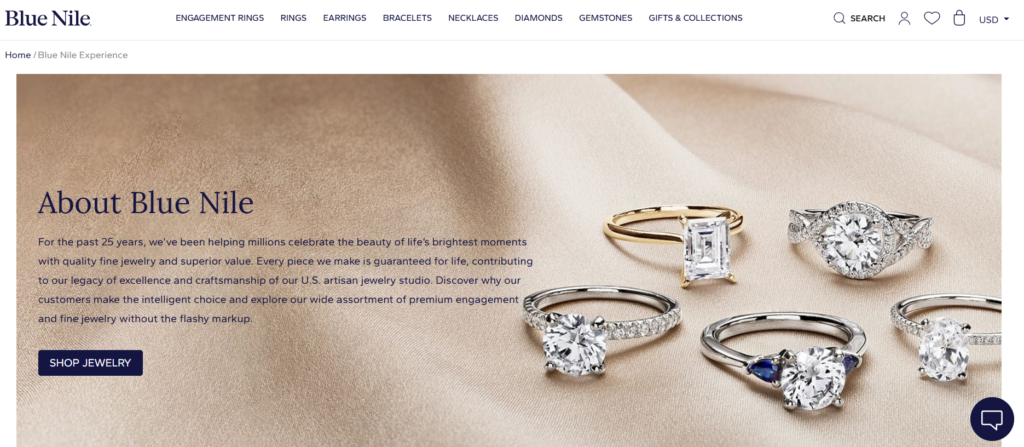
Blue Nile Inc. is an online jewelry retailer founded in 1999 that had a disruptive idea: diamonds don’t need hushed rooms, velvet trays, or salespeople hovering nearby. Put the inventory online. Show the specs. Let people decide.
Most shoppers don’t realize this, but Blue Nile doesn’t actually own the majority of the diamonds you see on the site. They function more like a highly polished connector between large global wholesalers and the end buyer. Because they’re not carrying massive inventory or paying for prestige storefronts and full-time security teams, their costs stay budget friendly. That’s why you can often buy a GIA-certified stone for 20 to 40 percent less than you would at a traditional jewelry store.
Tiffany & Co.: Control From Top to Bottom
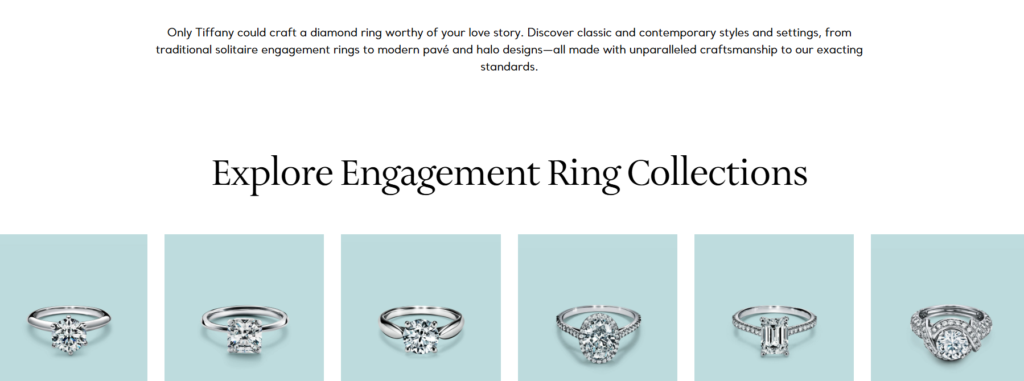
Tiffany, on the other hand, operates on the opposite end of the spectrum. They control much more of the journey from the ground to the ring. In some cases, that includes ownership of mines or exclusive sourcing agreements. They employ their own cutters and polishers. They reject far more stones than they accept. Everything funnels toward one goal: meeting the Tiffany Standard. And that standard is rigid by design.
When you buy from Tiffany, the diamond is only part of what you’re paying for. You’re also buying into nearly two centuries of history, the ritual of the experience, the perfectly choreographed service, and yes, the blue box that still manages to stop people in their tracks.
2. Understanding Quality Parity (The Secret the Industry Doesn’t Want You to Know)
The biggest issue for a lot of buyers is the assumption that cheaper means worse. For some reason, people still believe that, especially when it comes to diamonds. There is also the fear of making an expensive mistake, and that anxiety puts pressure on the buyer.
So let’s talk about what quality actually means without the romance layered on top. If you put two diamonds next to each other that are both 1 carat, Round Brilliant, G color, VS1 clarity, and Excellent cut, they are effectively the same stone. Same specs, same material, same performance. And yet one might sell for around $7,000 online, while the other sits in a Tiffany box priced closer to $18,000.
My father taught me a thing or two about comparing stones like this side by side, under identical lighting and using the same loupe. To the naked eye, there is no way you could tell them apart. And if you are not an expert, even under magnification you cannot reliably spot any differences. The human eye simply cannot see those differences.
Once you cross a certain quality threshold, the sparkle won’t increase, the brilliance won’t suddenly blind you, and the return flattens out. That’s quality parity. Past that point, the extra money isn’t paying for a better or shinier diamond. It’s paying for the name, the feeling of status, and the sense of being part of an exclusive group of people. To some, that matters more.
3. The Psychology of the Blue Box: Why People Pay the Premium
If diamonds are visually the same, why is Tiffany still the most famous jeweler on earth? Well, because as much as we like to think we are rational, we are actually very emotional beings. And an engagement ring is more than just stone and metal. It shows commitment, it shows effort, and it shows the extra mile you would go to be with your significant other.
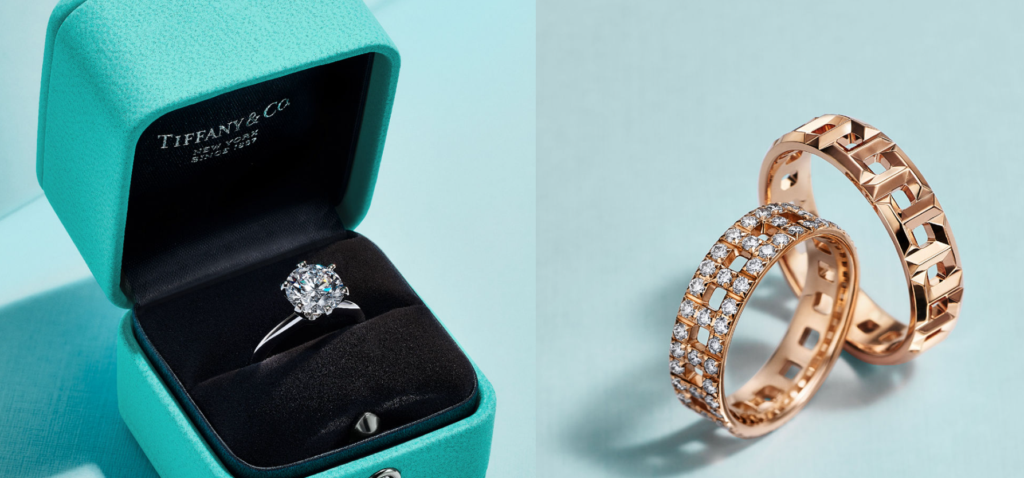
And to be fair, buying a diamond is terrifying. Almost everyone does not know what VS1 or VVS1, clarity, and everything in between means. I certainly didn’t when I started learning the business. But here’s the thing: Tiffany solves this by removing choice. They reject 99.96% percent of the world’s diamonds. Does that number seem suspiciously precise? Well, that number is precise to impress you, and it actually works.
When you walk into Tiffany, you don’t have to worry if the diamond is good. They’ve already done the vetting. For the buyer who suffers from decision fatigue, that curation is worth every extra penny.
The “Little Blue Box” Effect
There’s also an undeniable dopamine hit associated with the Tiffany Blue Box. It’s arguably the most recognizable piece of packaging in history. For many, the box is part of the gift. It signals to the recipient, and the world, that no expense was spared. It’s a shorthand for “you are worth the best.” And honestly? Sometimes that emotional payoff is worth more than the technical specs.
4. Where Blue Nile Wins: The Empowerment of Data
While Tiffany saves you the hassle of learning the ins and outs of what makes the perfect diamond, Blue Nile offers you control. For someone who is curious enough to dive in and learn everything, Blue Nile is your playground.
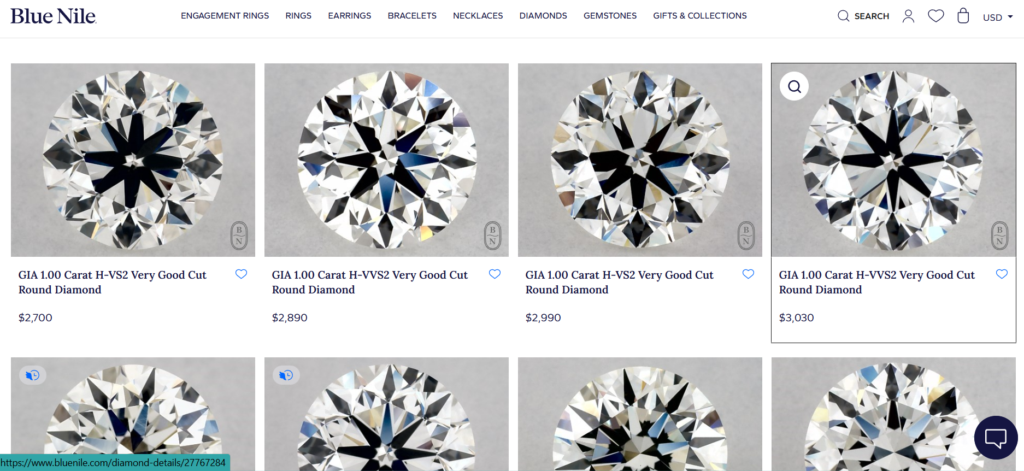
They allow you to filter through thousands of stones. You can get the best diamond for whatever your budget is, and if you see yourself as the kind of person who loves to nerd out on the ins and outs, let me give you the best strategies for choosing your sparkly stone.
The Color Hack
Instead of an E (Colorless) stone, you can choose an I (Near Colorless) stone. Set in yellow gold, the two look identical, but you’ll save around $2,000. I promise you, no one can tell the difference without a certificate.
The Carat Hack
Instead of a 1.00 carat stone, which comes with a hefty price, you can look for a 0.92 carat stone. It will look the same size to the naked eye but cost significantly less. Nobody is bringing a scale to your engagement party.
5. Comparing the Specifics: A Head to Head Breakdown
Diamond Sourcing
Blue Nile: Global wholesalers and aggregator
Tiffany & Co.: Does everything in house and directly sourced
Certification
Blue Nile: GIA, third party and unbiased
Tiffany & Co.: Tiffany Diamond Certificate, internal
Price for 1ct Round
Blue Nile: $6,000 to $9,000 average
Tiffany & Co.: $15,000 to $22,000 average
Setting Selection
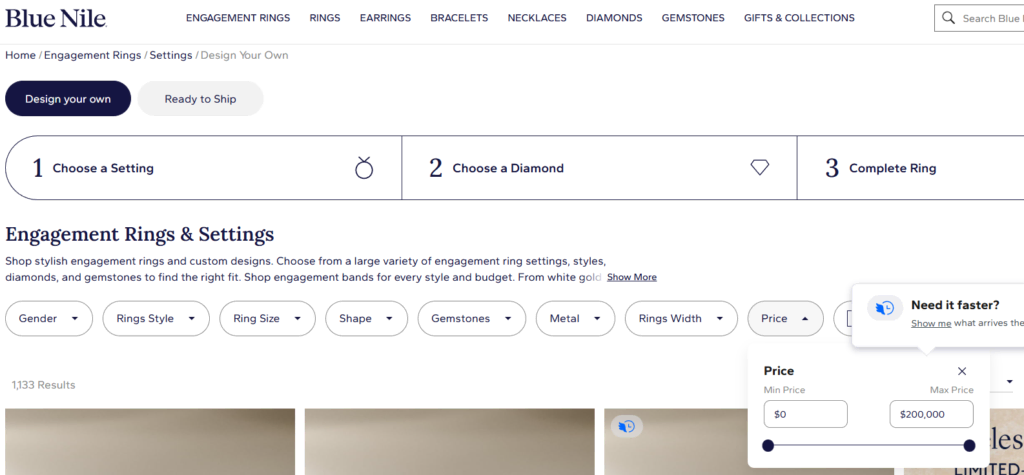
Blue Nile: Thousands of combinations
Tiffany & Co.: Limited, iconic collections
Lab Grown Options
Blue Nile: Yes, with significant savings
Tiffany & Co.: No, natural diamonds only
Service Model
Blue Nile: Primarily online with some showrooms
Tiffany & Co.: Global high end boutiques
6. The Setting Debate: Craftsmanship vs. Variety
The diamond is only half the story. The setting, the ring that holds the stone, is where Tiffany often justifies the price tag.
The Iconic Tiffany Setting
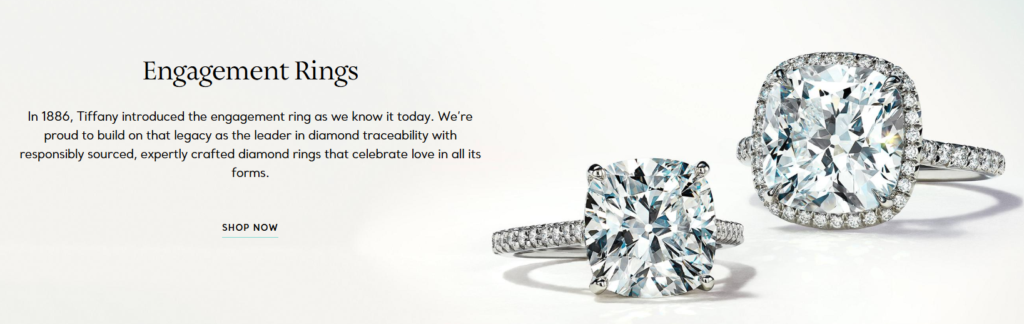
The famous Tiffany solitaire design was introduced in 1886. It was created to lift the diamond off the band to let more light in. Tiffany’s prongs are known for their thin eagle claw shape, making the diamond look like it is floating. Everything is done to the highest standard. Whether that difference is worth $10,000 is up to you, but the craftsmanship is undeniable.
Blue Nile’s Designer Collaborations
To compete with Tiffany’s design heritage, Blue Nile has partnered with designers like Bella Vaughan and Zac Posen. This allows you to get a designer feel without the Fifth Avenue price tag. If you want a ring that feels unique and modern, Blue Nile actually offers more stylistic variety than the traditionalist Tiffany.
I’ve also found that Blue Nile’s customization options let you create something that feels completely personal to your relationship, which can be even more meaningful than a famous name.
7. The Practical Verdict: How to Choose
To make your decision easier, ask yourself three questions:
1. Does my Partner Care About the Brand or the Look?
If your partner wants a big sparkly stone and couldn’t care less about the blue box, then obviously Blue Nile is the clear winner. You can also get a significantly larger, higher quality stone for the same budget. I’m talking about a visually noticeable difference.
2. How Much Do I Trust My Own Research?
If learning all the ins and outs of a diamond overwhelms you and you have very little time to do proper research, then go to Tiffany. They are the masters of the safe choice. Trust me, there is no shame in wanting someone else to do all the heavy lifting for you. That is literally what you are paying for anyway.
On the flip side, if you do trust your research skills and want more control over the details, Blue Nile shines. Their strength is transparency and choice. They offer detailed specs, side-by-side comparisons, and the ability to tailor your decision based on what matters most to you. It’s still a trusted name, you’re just more hands-on in the process.
3. What is my Forever Plan?
One more thing. Tiffany offers a lifetime of in-person service. You can walk into any Tiffany store in the world, whether it is Paris, Tokyo, or New York, even 30 years from now, and they will clean and inspect your ring for free. In all fairness, Blue Nile offers great digital support, but it really lacks the personal touch. So if having a physical relationship with a brand matters to you, then that is worth considering.
The Final Verdict
At the end of the day, you have two solid options to choose from. What matters is which philosophy you’re more comfortable with. Both philosophies are sound, both are safe, and both are solid options for the next phase in your life. It all comes down to whether you want to do your own research for the biggest, most brilliant diamond for your budget, or you want heritage, name, and to have everything done for yo