
- Where to Buy Gemstone Engagement Rings - November 1, 2026
- Brilliant Earth vs KAY Jewelers - September 29, 2026
- Blue Nile vs Helzberg Diamonds - September 10, 2026
I design jewelry for different brands from different parts of the world, and when I have to design jewelry with diamonds, one thing that always surprises me is how little people know about lab grown diamonds. The idea that a lab grown diamond is a “fake” diamond still persists, and I think the main reason for this is that age-old fear of buying a diamond and being sold a fake one. For some reason, there’s still a belief surrounding lab grown diamonds that you’re buying something of poor quality.
Today I’m going to talk about jewelry brands that sell the best lab grown diamond stud earrings, according to your style and budget, as well as clarify myths and truths about lab grown diamonds, their difference from mined diamonds, and why they are gaining more and more popularity.
Things to Consider When Buying a Diamond Stud Earring
Mined or Lab Grown Diamonds?
This is the first question that comes to mind, and to answer it I need to clarify a few things. First, mined diamonds are created over billions of years and are obtained by mining the earth. On the other hand, lab grown diamonds are created in a controlled environment inside a laboratory, and are obtained after weeks or months. Mined diamonds are composed of almost pure carbon, and the composition of lab grown diamonds is exactly the same. Therefore, it cannot be said that they are fake; they are not made of plastic, glass or any other component, lab grown diamonds are made of carbon just like mined diamonds.
If you choose mined diamonds, you should know that the diamond you choose is the result of millions of years, produced by nature, and that makes it special. But you also need to know that there are conflict diamonds, diamonds often linked to serious human rights violations, forced labor and child exploitation in Africa, and are illegally traded to buy weapons. Also, these diamonds cause serious environmental damage during their extraction.
Meanwhile, lab grown diamonds don’t cause environmental damage, and you know that by buying them, no one’s rights were violated. The fact that they are created much faster than mined diamonds and that there are fewer intermediaries in the process makes them significantly cheaper.
In the past, lab grown diamonds like today didn’t exist. Those on the market were of very poor quality or were imitations. Now, there’s no difference to the naked eye between a mined and a lab grown diamond.
Types of Settings
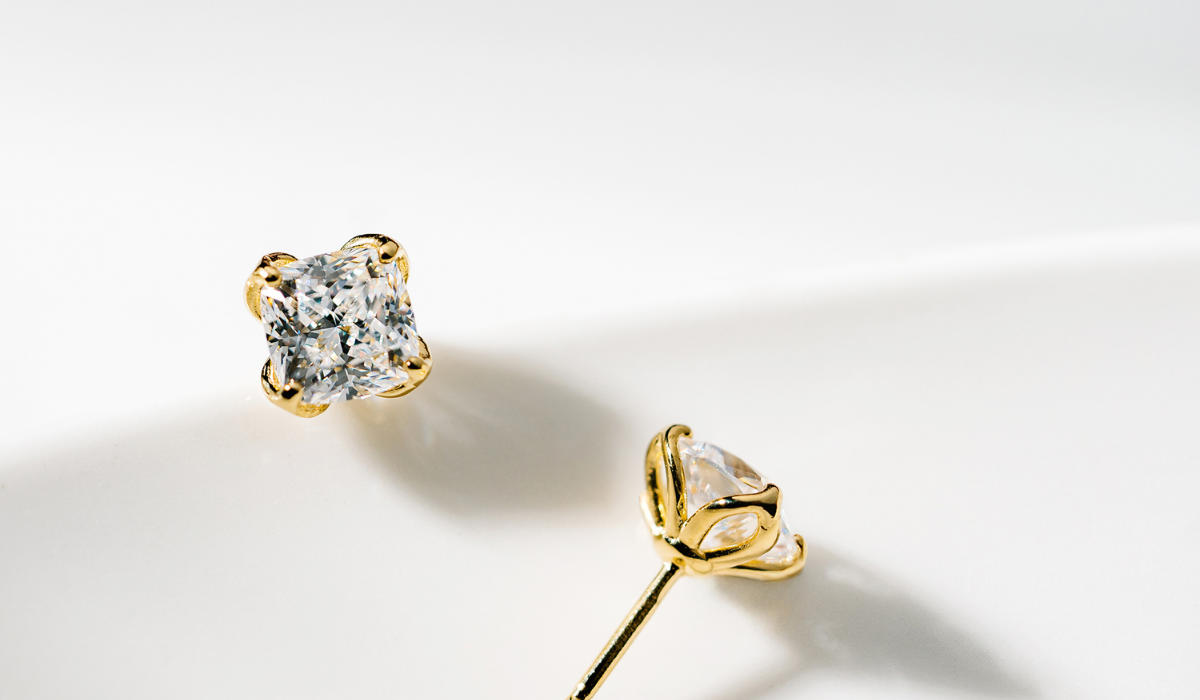
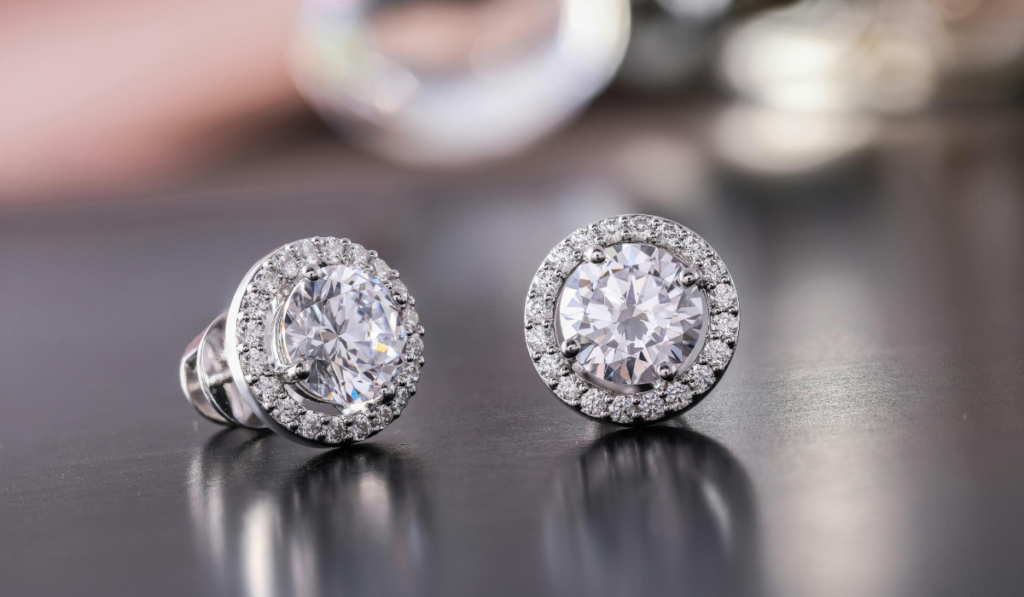
There are three common settings for a stud earring. The first is a prong setting, where claws are holding on to the diamond. A prong setting makes the diamond sparkle more because it allows more light to hit the surface. Secondly, with a halo setting, there is a diamond in the center with tiny diamonds surrounding it giving a very elegant look. Finally, the bezel setting, where metal surrounds the diamond. This is considered one of the most secure settings.
The Back
With stud earrings, the back matters. The majority of people who want stud earrings are looking for comfort and simplicity, and for some that means a piece of jewelry that’s easy to put on and take off and, most importantly, a pair of earrings that won’t fall out. Typically there are two types of backing: push and screwback.
Pushback: The most classic earring style, this back usually has a butterfly shape that slides onto a straight earring post and presses onto the back of the earlobe. It’s a comfortable choice for everyday studs. If you want a stud earring easy to put on and take off, this is what you want to look for.
Screwback: With screwbacks, the post has the shape of a screw. The back twists on the earring post and adjusts the earring. This is the most secure type. If you want to wear the earrings for a long time, or are worried about losing your earrings, this is the one for you.
Shape
Diamond stud earrings come in a variety of different shapes, the most common being round, marquise and emerald. The one to go for depends on your personal taste, but a round diamond is a classic for a reason, and can be dressed up or dressed down accordingly.
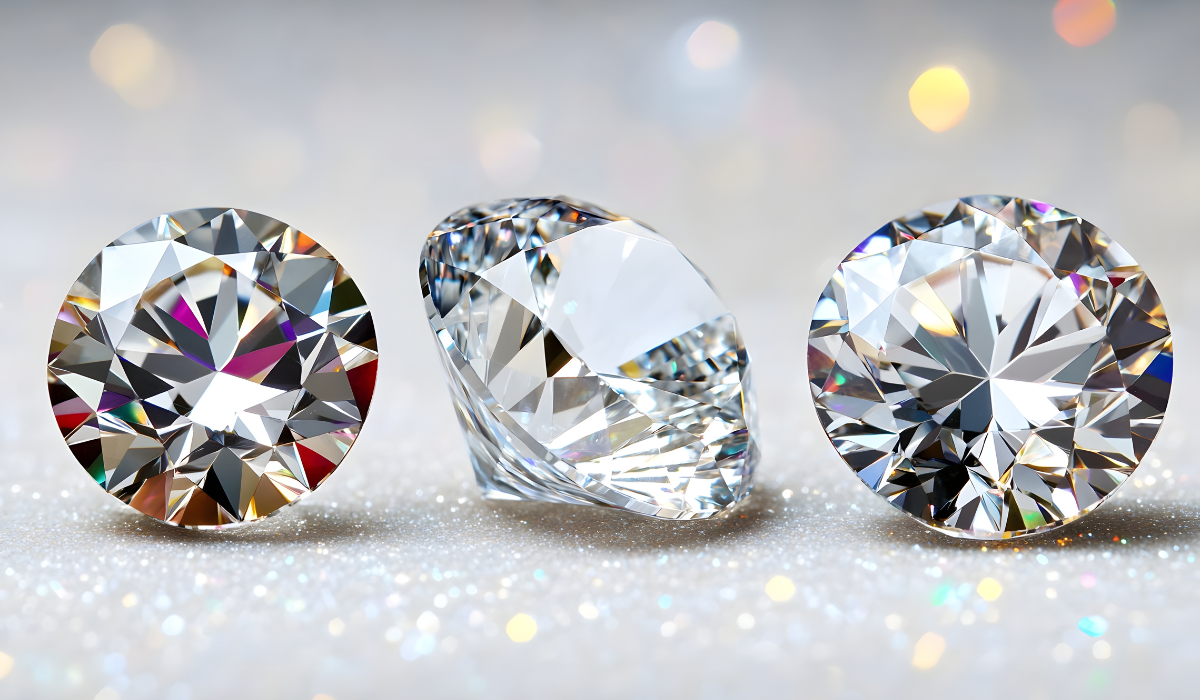
Now it’s time to talk about the most important component of the earring: The lab grown diamond.
If we want to buy a lab grown diamond, we have to take into account the same criteria as if we were choosing a mined diamond. I am talking about the 4Cs– cut, color, carat and clarity.
Cut: The cut is how a diamond’s facets interact with light. If the proportions of the cut are correct, the diamond will have optimal brilliance and sparkle. In contrast, a poor cut allows light to escape through the bottom, and the diamond may appear dull or lack shine.
This criteria is often confused with the shape of the diamond, but they are completely different. Regardless of its shape, the diamond must have a good cut to ensure brilliance.
Color: Diamonds come in many different shades. Typically most people want a perfect clear and white diamond for their studs. Diamond color is graded from D (colorless) to Z (visible yellow/brown tint). Nobody wants a yellowish diamond, grade D/E are traditionally the most valuable.
It’s important not to be fooled; many times sellers try to pass off a Z-grade diamond as a fancy diamond (colored diamonds). Fancy diamonds are the most expensive, but the color must be intense, a beautiful yellow, not a dirty yellowish hue.
While lab grown colored diamonds are more expensive because the production cost is higher, it doesn’t compare to the high price of mined diamonds, due to their extreme rarity.
Be aware that the color of the metal that you choose for your diamond studs will impact the color of your diamond. If you have colorless diamonds (D, E, F grade) you should choose platinum or white gold. With near colorless diamonds (G,H, I) the best options are yellow gold, rose gold or sterling silver.
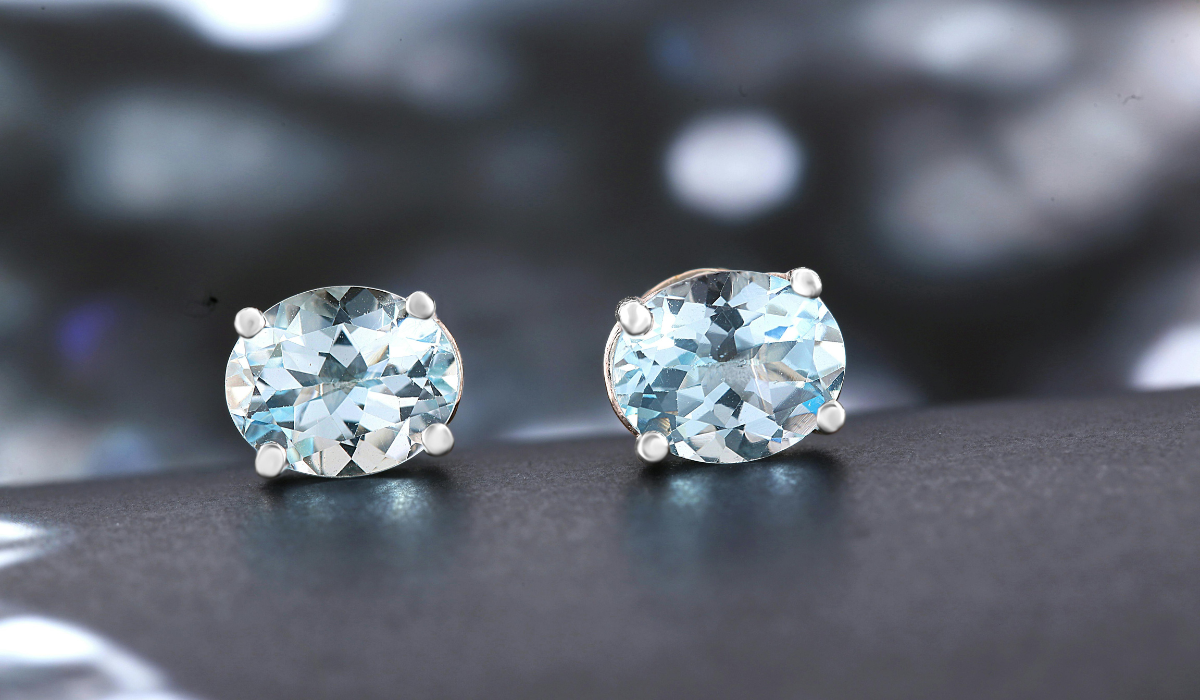
Carat Weight: Carat measures weight, not size. Therefore a diamond with a high carat size is not necessarily larger than one with a smaller carat size. This is why it is recommended, if possible, to buy a 0.98 carat diamond instead of a 1 carat diamond. This one is significantly more expensive and there is no difference in size.
Diamond earrings are sold based on their total carat weight; this is the total weight of all the diamonds in a pair of earrings. When you buy your studs, you’ll see it says 1 ct. tw. That means one carat per pair. Therefore, each individual stud will be 0.5 carats. Don´t forget about this detail.
I would choose a 1 carat total weight for my lab grown diamond studs; they’re just the right size to add a little bit of luxury to any look.
Clarity: The clarity of your diamond is not related to its color, but to the impurities it contains. Surface flaws are called blemishes, while internal characteristics are known as inclusions. The quality grade of a diamond depends on the location of these flaws. The more visible they are, the lower the clarity grade and the cloudier the diamond will appear.
In lab grown diamonds the flaws are often less noticeable and less frequent than those found in mined diamonds, due to the fact that they are created in controlled environments. If lab grown diamonds were flawless, it would be obvious at a glance that they aren’t mined. The presence of flaws makes it impossible to distinguish them with the naked eye, requiring us to take them to a laboratory for expert analysis.
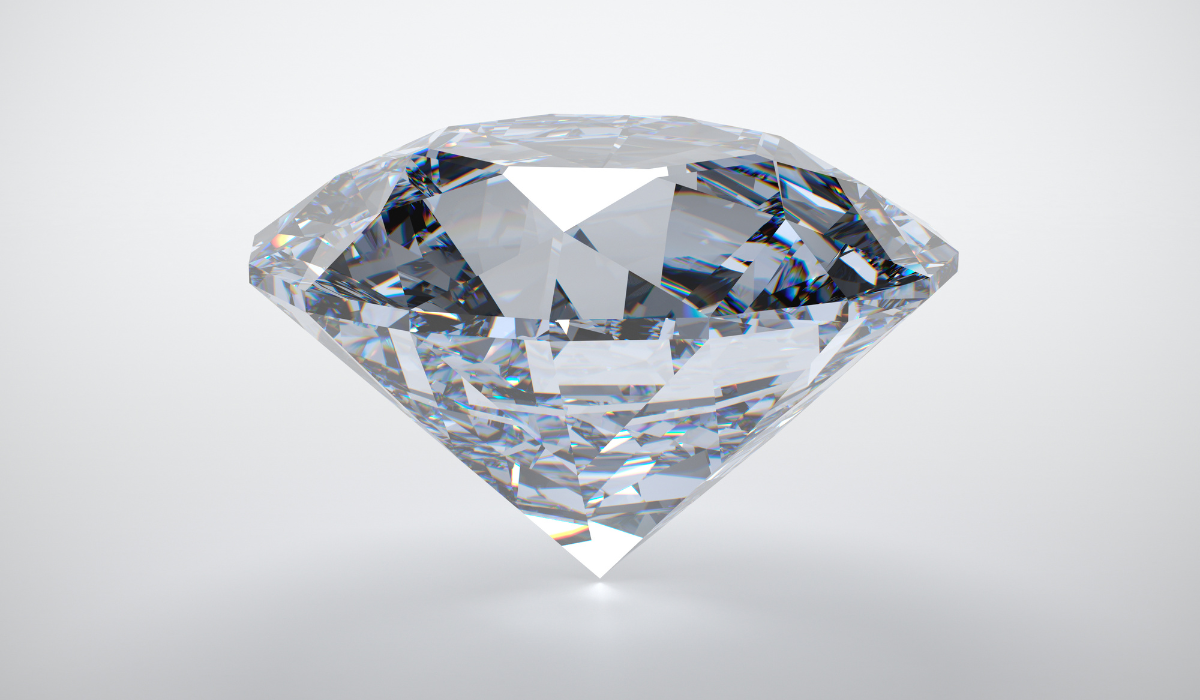
Certification: When purchasing a lab grown diamond, it must have a certificate. There’s no discussion about that. It’s essential to choose a certified diamond, as grading reports provide assurance of a stone’s quality and authenticity.
Lab diamond certification is a document from a recognized laboratory (I only choose certification from GIA or IGI) that describes a diamond and its characteristics.
The certificate is used to compare diamonds and determine if the price is fair. Some people believe that diamonds with certificates are more expensive, but the truth is that diamonds without certificates usually end up being more expensive since there is no way to know if the price is fair or not, because their quality is unknown.
Best Places to Buy Lab Grown Diamond Stud Earrings At a Glance
| Best For | Price Range | Features | |
| Blue Nile | Wide selection, custom options | ~$234 – $16,870 |
Variety of cuts, 14K gold and platinum settings, four-prong, martini and bezel settings |
| Aurate | Everyday, minimalist options | ~$390 – $6,550 |
14K gold settings, multiple cuts, bezel and prong settings |
| Brilliant Earth | Distinctive settings | ~$245–$15,400 |
Variety of shapes, four-prong, martini, claw-prong and bezel settings, 14K gold and other precious-metal choices |
| Mejuri | Contemporary and everyday styles | ~$168–$1,500 |
Lab-grown diamond studs in 14K solid gold, round, drop and decorative designs, some single-stud options |
Where to Buy the Best Lab Grown Diamond Studs
Blue Nile
Blue Nile offers lab grown diamonds in every shape, carat, metal and style. Besides having many options available, you can design your own diamond stud earring. First you choose the setting, then the diamond (or whichever gemstone you like) and then you’ll have a fully custom and completely unique set of stud earrings!
It’s worth clarifying that it’s one of the brands with the best reputation in online diamond sales. Blue Nile, in my opinion, is the perfect option if you want to buy your first pair of lab grown diamond studs, or the second one, or the third…
Features
- Round, oval, princess, emerald and other cuts
- 14K gold and platinum settings
- Four-prong, martini and bezel settings
Pros
- Extensive inventory
- Customizable diamond selection
- Classic and contemporary styles
- Established diamond retailer
Cons
- Large catalog can make comparisons overwhelming
- Some designs have limited setting or backing options
- Prices vary significantly with diamond specifications
Price: ~$234 – $16,870
Best For: Shoppers wanting a wide selection, traditional diamond studs and customizable options.
What I would buy: The Four Prong Round Brilliant Lab Grown Diamond Stud Earrings in 14k White Gold , 1 Ct. tw. It is a long-term investment, but you’ll be completely satisfied.
Aurate
I think Aurate is perfect if you are looking for trendy styles for your stud earrings. Always with a minimalistic aesthetic, its designs are more than just the classic stud earring; and you can choose to buy a pair or a single earring. This allows you to create different combinations if you have multiple piercings. And I love that.
Features
- Lab-grown diamond studs in 14K gold
- Round, oval, pear and marquise cuts
- Bezel and prong settings
Pros
- Everyday minimalist styles
- Solid gold construction
- Options for different budgets and diamond sizes
- Distinctive shapes
Cons
- Less extensive diamond customization than dedicated diamond retailers
- Some larger or specialty styles carry premium prices
- Fewer traditional diamond specifications to compare across every design
Price: ~$390 – $6,550
Best For: Buyers looking for minimalist fine jewelry, everyday studs and distinctive diamond shapes.
What I would buy: I am in love with the Luxury Oval Lab Grown Diamond Studs. This design is timeless and easy to combine with any outfit.
Brilliant Earth
Another well-known name in the world of diamond dealers, and for a good reason: the quality of their jewelry. That’s why I would consider this label not only for engagement rings but also for a good pair of lab grown diamond stud earrings. In this category, there are not as many models as with mined diamonds, however, I consider it an excellent option if what I’m looking for is something classic and of high quality.
Features
- Lab-grown diamond studs in round, emerald, hexagon and other shapes
- Four-prong, martini, claw-prong and bezel settings
- 14K gold and other precious-metal choices
Pros
- Broad selection of styles and carat weights
- Both classic and fashion-forward designs
- Customization and diamond education resources
Cons
- Some styles are more expensive than comparable basic studs
- The large selection can make choosing difficult
- Premium designs increase the overall cost
Price: ~$245–$15,400
Best For: Buyers wanting design variety, certified diamond options and more distinctive settings.
What I would buy: The Princess Lab Diamond Stud Earrings (1 ct. tw.) in 18K White Gold. A lovely design for your every day look.
Mejuri
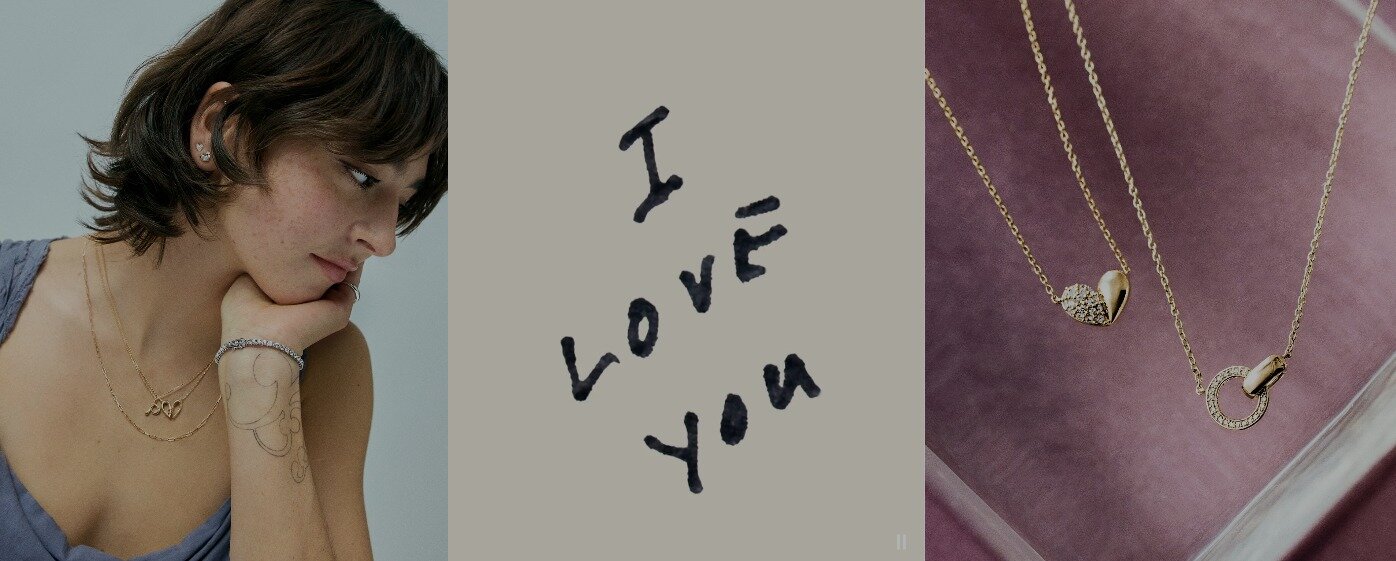
This brand is preferred by millennials for its minimalist aesthetic and easy to mix and match designs. It has several models of lab grown diamond stud earrings at affordable prices, and their timeless designs are hard to resist as they embody the standard of a stud earring: classic and beautiful.
Features
- Lab-grown diamond studs in 14K solid gold
- Round, drop and decorative designs
- Some single-stud options
Pros
- Modern, minimalist designs
- Solid-gold construction
- Traceable lab-grown diamonds
- 30-day returns and a two-year workmanship warranty
Cons
- Smaller selection of traditional diamond stud pairs
- Some designs are sold individually
- Relatively expensive for certain carat weights
Price: ~$168–$1,500
Best For: Buyers who prioritize contemporary styling, everyday wear and minimalist jewelry.
What I would buy: The Lab Grown Diamond Round Chain Stud in yellow gold, It comes individually and is perfect for combining with other pieces of jewelry.
Final Thoughts on Lab Grown Diamond Stud Earrings
You can’t go wrong with a good pair of lab grown diamond studs. Period. They go well with just about anything, and will always add a touch of elegance to your day.
I would choose lab grown diamonds instead of mined ones, because nobody will notice and their price is lower, which is a win-win. And let’s add to that the fact that they are a more ethical and environmentally fairer option than mined diamonds.
Always prioritize quality over price. After all, you’re buying diamonds that will last a lifetime. Keep the 4Cs in mind, always, and remember that lab grown diamonds are less expensive, so you can choose the highest quality grades. Many places offer a wide range of lab grown diamond studs, so you’re bound to find a timeless piece to add to your jewelry box.