
- Brilliant Earth vs VRAI: Which Is Better for Your Engagement Ring? - September 29, 2026
- Best Cowboy Boots for a Wedding (Without Looking Like You Misread the Invitation) - September 21, 2026
- Tawkify vs. Kelleher International: Which Matchmaking Service Is Better? - September 10, 2026
I looked at engagement rings for years before I got engaged, which probably says as much about the way I make decisions as it does about rings.
I knew fairly early that I wanted a pear-shaped center stone because I liked the way the longer shape looked on my hand, and I wanted either white gold or platinum because I preferred a white metal with my skin tone. Even after narrowing it down that much, there were still halos, no halos, different settings and enough variations that I could spend an entire evening looking at rings that probably looked almost identical to anyone else.
By the time my now-husband was ready to buy mine, I had sent him enough examples that he knew the general style I wanted, which was good because he had no idea what the 4Cs meant. I remember explaining cut, color, clarity and carat to him and telling him not to worry because I had already done the research and could narrow the choices down. He still got to choose the ring and surprise me, but he wasn’t starting with thousands of options and trying to guess what I meant by “something delicate.”
If a friend told me she was starting to shop for an engagement ring tomorrow, I would tell her to figure out what matters to the person wearing it before getting buried in numbers. There are plenty of specifications worth understanding, but they become much easier to use once you know what you are looking for.
1. Starting With the Biggest Diamond You Can Afford
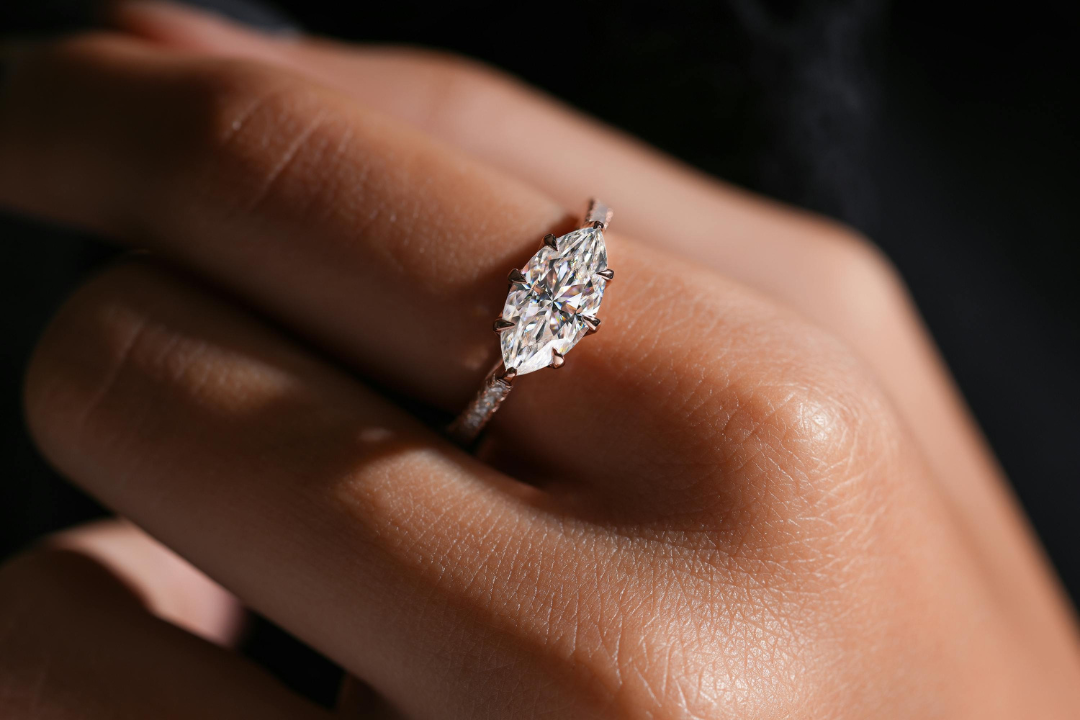
When I was younger, I put a lot more importance on carat weight than I do now because bigger seemed like an obvious upgrade. Carat is easy to compare, and if you do not know much about diamonds yet, it is tempting to treat that one number as a shortcut for figuring out which stone is better.
Carat only measures a diamond’s weight, though, while the other parts of the 4Cs cover cut, color and clarity. Two diamonds with similar carat weights can look noticeably different depending on their proportions, so choosing the highest number your budget allows does not necessarily give you the ring you will like most.
I would start with the things that are more personal. I cared about pear shape because of how it looked on my hand and white metal because of my skin tone and the jewelry I already wore. Someone else may have always wanted yellow gold or need a lower setting because they work with their hands.
Once you settle a few of those preferences, you can use the diamond specifications to narrow things down rather than letting them make the entire decision for you.
2. Putting Carat Ahead of Cut and Overall Appearance
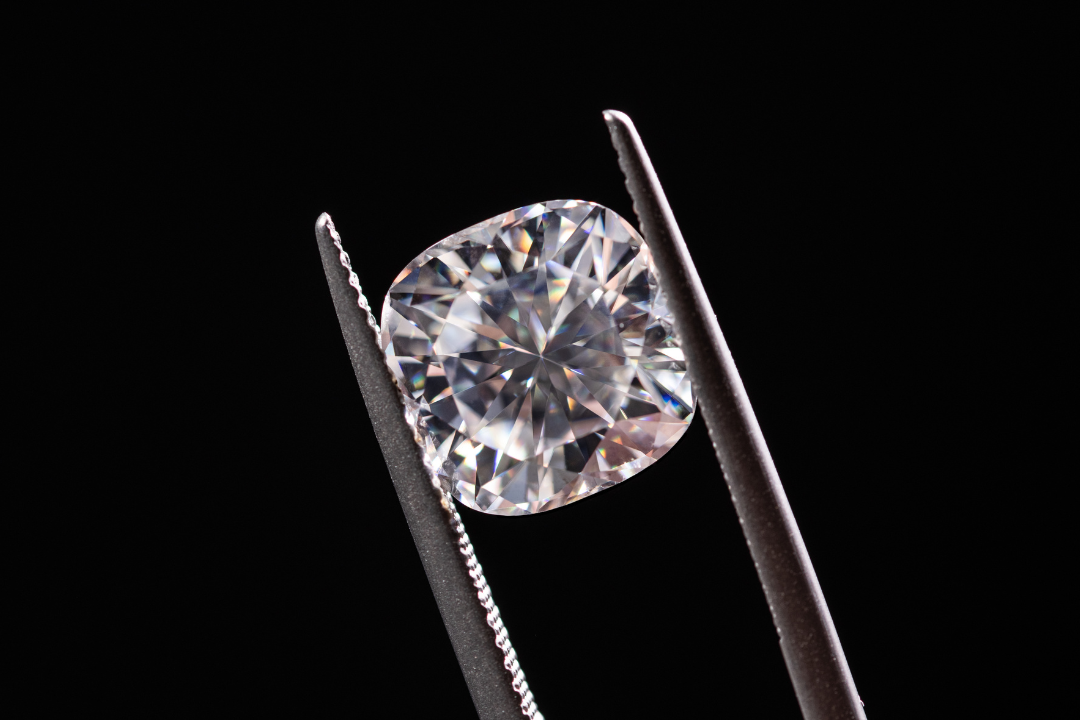
Carat and cut were probably the two things I had most backward when I first started researching diamonds. I assumed I would rather have the extra size, but the more stones I looked at, the more I realized I cared about that mesmerizing quality where you keep moving the ring around just to see what happens when the light hits it.
Cut plays a major role in how a diamond interacts with light and affects characteristics such as brightness, fire and sparkle. A larger diamond can still be less visually interesting than a slightly smaller one with better light performance, which is why I would not automatically sacrifice cut just to reach a particular carat weight.
Fancy shapes add another layer because GIA’s formal cut grade applies to round brilliant diamonds rather than shapes such as pear, oval or marquise. Since I wanted a pear, I had to pay more attention to proportions, symmetry, polish and the way the individual stone looked instead of expecting one cut grade to make the decision for me.
Carat can still matter if size is one of your priorities, but I would rather choose the diamond I cannot stop looking at than the one that simply gives me the biggest number on paper.
3. Skipping the Independent Grading Report
A grading report is probably not the part of engagement ring shopping most people get excited about, but it becomes more interesting once you realize how much money you are about to spend. An independent report gives you documented information about characteristics such as carat weight, color and clarity, along with other details about the stone, so you have something consistent to reference while comparing options.
It does not tell you which diamond you personally find the most beautiful, but it can help you understand what you are buying and why two diamonds that initially look similar may be priced differently.
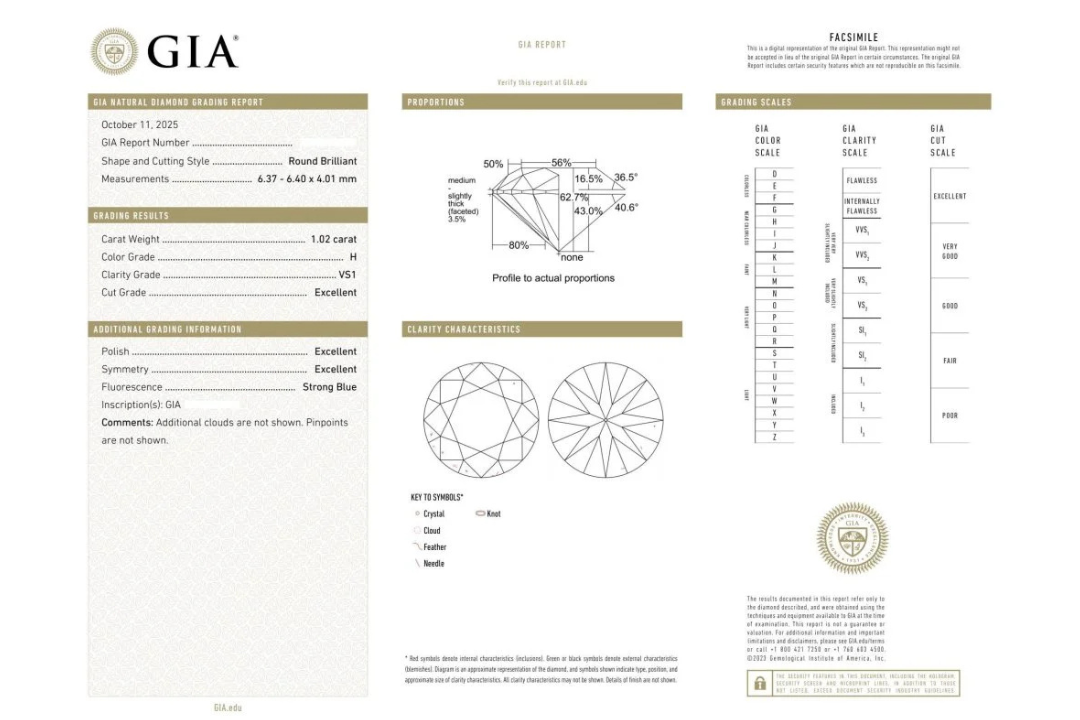
Online jewelry sites like Blue Nile make that information part of the online shopping process, with grading information from recognized independent laboratories such as GIA and IGI depending on the stone. That is the kind of transparency I would want with a purchase this expensive because I want to understand both the diamond and the documentation instead of relying entirely on somebody else’s description.
4. Choosing the Thinnest Possible Band Without Thinking About Your Real Life
I love the look of a delicate engagement ring, and mine has a simple skinny band because I wanted most of the attention on the pear-shaped center stone. I would probably still lean toward a delicate style today, but I would spend more time thinking about what that ring has to deal with during an average week instead of looking only at how pretty it is.
Band width affects the proportions of the ring, but comfort, durability and lifestyle matter too. Someone who works with their hands every day may have very different needs from someone whose jewelry gets fairly gentle wear.
I grew up working on a farm, and I still spend plenty of time around animals, hay and mud that I do not particularly want packed into an engagement ring. I usually take my rings off before I go outside to do farm chores, even though I hate taking them off because I love wearing them and then have to remember where I put them.
My lifestyle did not stop me from choosing a delicate ring, but it does affect when and how I wear it, and that is worth considering before buying something you plan to wear for decades.
5. Choosing the Engagement Ring Without Thinking About the Wedding Band
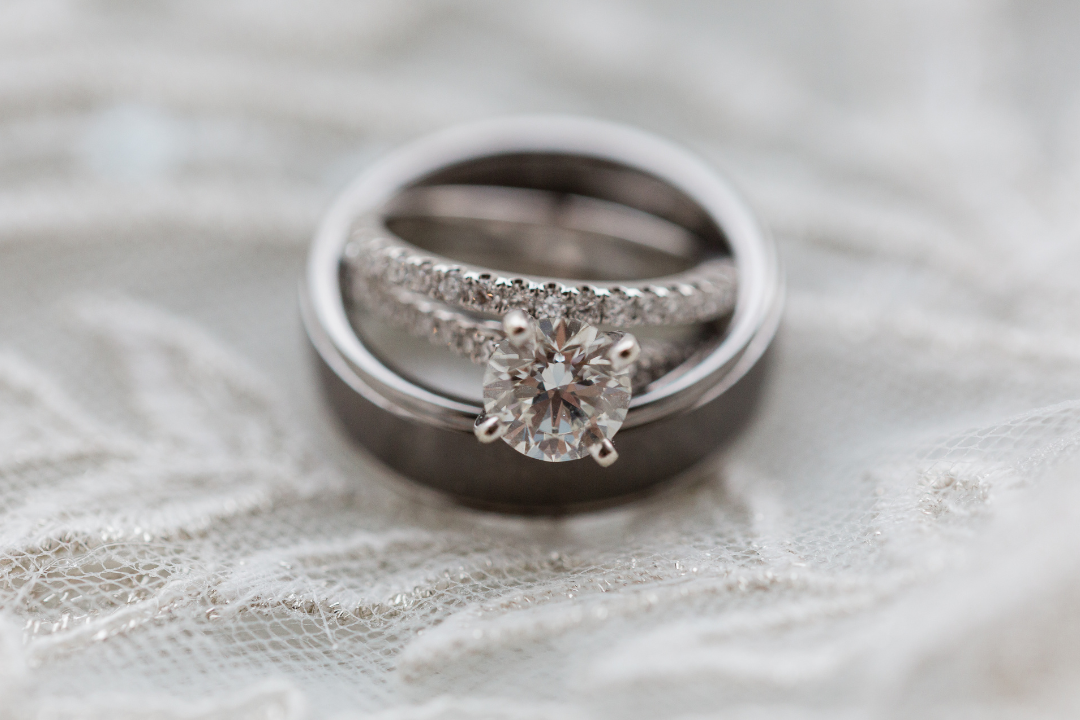
This is one of the mistakes I would handle differently because I treated my engagement ring and wedding band as two completely separate decisions. When I was looking at engagement ring styles, I knew I wanted the skinny plain band and pear-shaped center stone, but I was not thinking very far ahead to what I might eventually want to put beside it.
Later, I decided I wanted an eternity-style wedding band with diamonds going all the way around, and that was when I realized my engagement ring setting had already narrowed my options. The shape and height of the setting can determine whether a straight wedding band will sit flush against the engagement ring, while some designs work better with a curved or contoured band.
I eventually found a combination I liked, but it would have been easier if I had tried a few wedding bands alongside the engagement rings while I was still deciding. You do not have to buy both at the same time, but if you already know you love a particular band style, it is worth making sure the engagement ring is not going to make that choice much harder later.
6. Guessing the Ring Size
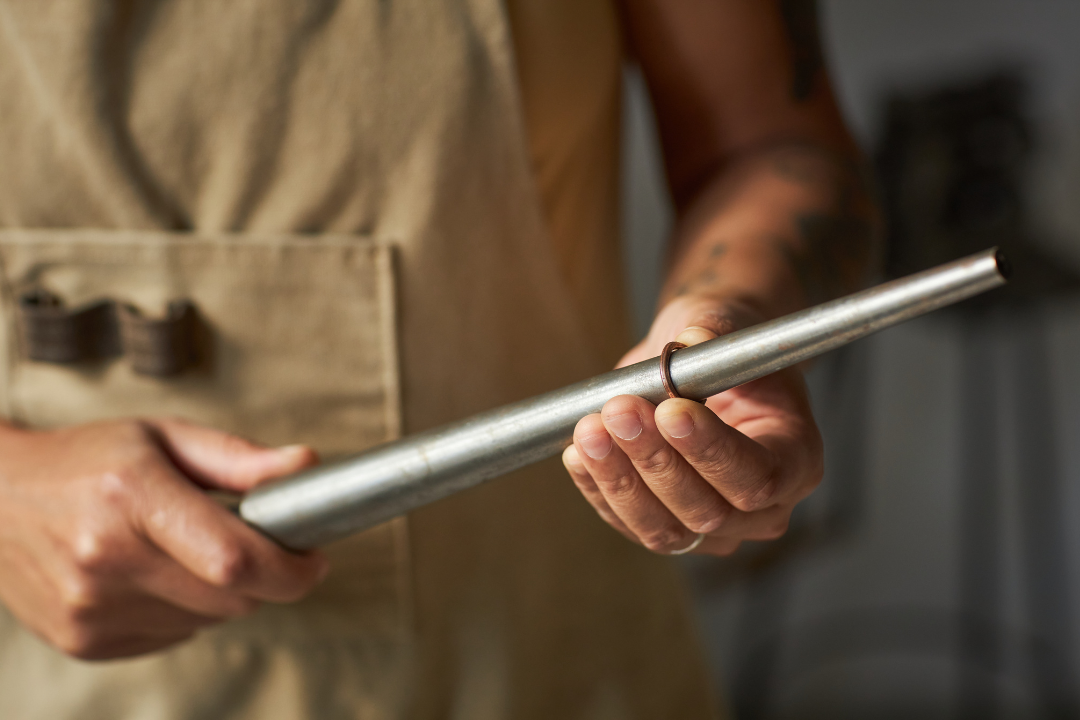
My now-husband and I learned this one immediately because I forgot to tell him my ring size before he bought the ring. He apparently looked at my hands and decided my fingers were daintier than they really are, which was very sweet but also completely wrong because I grew up doing farm work and my hands are stronger than they look.
The ring was not just a little snug. By the morning after we got engaged, it was tight enough that it was cutting off circulation, so I had this ring I had dreamed about forever and almost immediately had to hand it over to be resized. I was heartbroken, even though obviously resizing it was the right thing to do.
There are much better options than guessing. You can have the finger professionally measured, use a ring sizer or measure a ring that already fits correctly, and sites like Blue Nile also offer to send you sizing tools for people shopping remotely. Even if you are trying to protect the surprise, finding some reasonably accurate way to estimate the size is worth the effort.
I have also managed to experience the opposite problem since then. I recently lost some weight and my rings became loose, and one day while I was grocery shopping I heard a little clink on the floor but did not think much of it until I got into the car, looked down and realized my ring was gone. I ran back into the store, remembered where I had heard the sound and was incredibly lucky to find it still sitting on the floor.
After dealing with a ring that was too tight and then one loose enough to fall off in public, I no longer think sizing is one of the details you can casually estimate and deal with later.
7. Dismissing Lab-Grown Diamonds Without Understanding Them
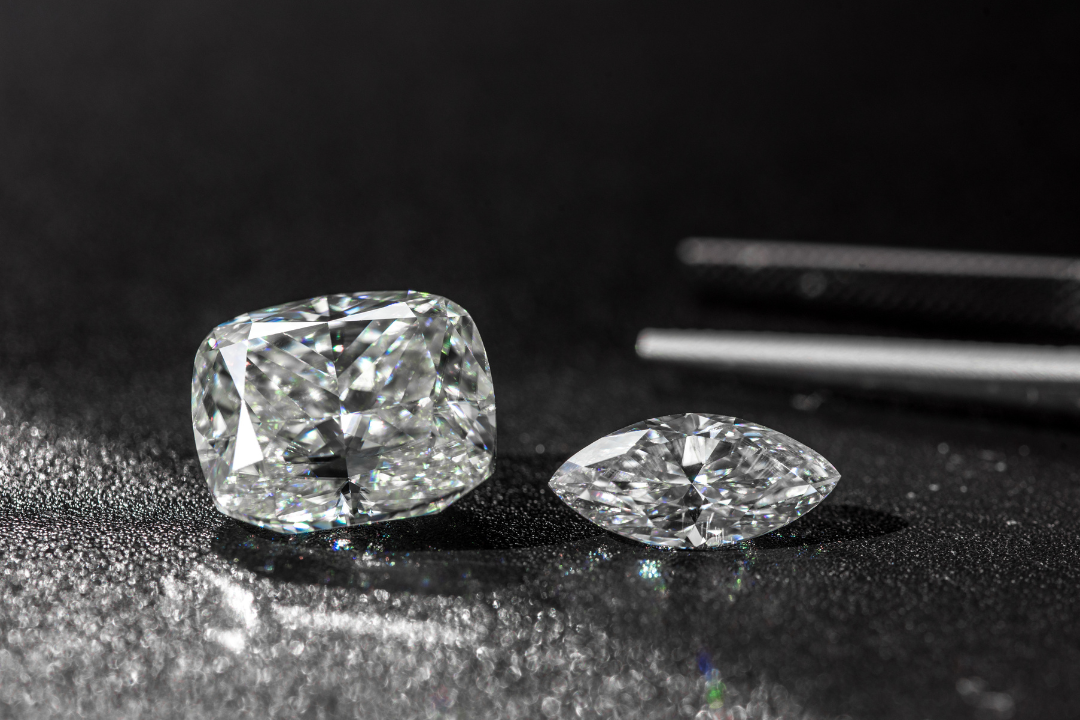
If I were shopping today, I would be open to a lab-grown diamond, partly because sourcing is something I care about, but I also think this is an area where it is easy to make broad assumptions in either direction without looking closely at what you are buying.
Lab-grown diamonds can be evaluated using the same 4Cs framework, and reputable options may also come with independent grading reports. Sellers are required to make it clear when a diamond is laboratory-grown rather than mined, so shoppers should be able to understand which type they are considering.
I would be careful about turning the decision into a simple statement that one category is automatically more ethical than the other because sourcing and production practices still matter.
For some people, the origin, rarity and tradition associated with diamonds are important, while someone else may decide a lab-grown diamond makes more sense for their priorities and budget. I would want to understand the differences before dismissing either option.
8. Choosing a Ring Because the Shape Is Trending
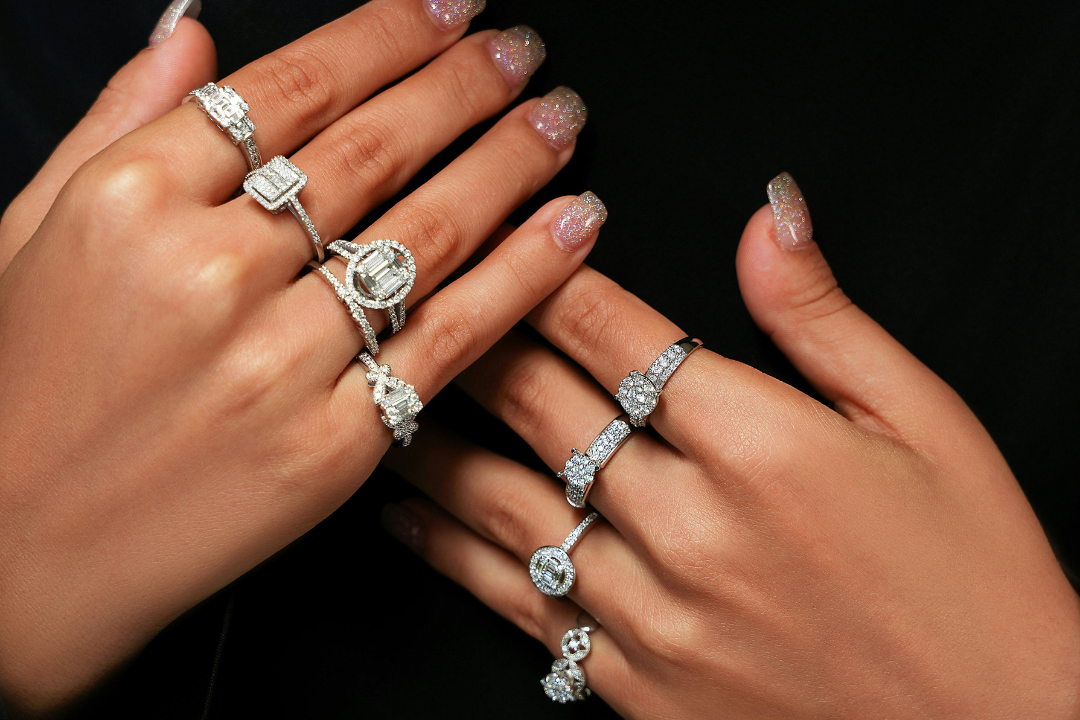
Pear-shaped engagement rings happened to be popular around the time I got engaged, but that was not why I wanted one. I had looked at enough different shapes to know I kept coming back to pear because I liked what the elongated shape did for my hand.
I have always felt like my hands look a little stronger from growing up doing farm work, and the pear made my fingers look longer and more delicate to me. Once I knew that was the effect I liked, it did not matter much whether the shape happened to be popular at the time.
Trends can still be helpful because they expose you to designs you may not have considered, and there is nothing wrong with loving something that happens to be popular. I would just make sure you like the way the ring looks on you because you may still be wearing it long after everyone has moved on to the next trend.
9. Shopping at One Traditional Retailer Without Comparing Online Options
Trying rings on in person can be incredibly helpful, especially at the beginning when you are still figuring out what you like. At the same time, I would not shop at one store and assume that one display case gives me enough information to understand the wider market or whether I am getting good value.
Online jewelers like Ritani or Brilliant Earth make it easier to compare diamonds using the same basic characteristics and see how changing cut, carat, color or clarity affects the price. Blue Nile, for example, lets shoppers filter graded diamonds online and compare a much larger assortment than most people could realistically see during one trip to a local jewelry store, and it also offers a price-match program for qualifying comparable loose diamonds.
That does not mean an online ring will always be less expensive because you still have to compare similar stones, settings and services. I would look at the grading report, setting cost, resizing policy, return terms and support available after the purchase, then compare the total value rather than assuming the first place I shop is automatically the best option.
10. Looking at So Many Rings That You Make the Decision Harder

This is probably the mistake I was destined to make because I can overthink an expensive purchase with the best of them.
Even after I had narrowed my choices down to pear-shaped stones and white metals, I still looked at hundreds of rings and found another variable to reconsider every time I thought I was getting close, whether it was a halo, setting height, band width or a slightly different version of something I had already looked at repeatedly.
Research helped me understand what I liked, but eventually I was not learning much anymore and was mostly giving myself more choices. If a friend told me she was beginning the process now, I would tell her to choose a few priorities first and use those to narrow the field before she spends weeks comparing things she would never seriously consider anyway.
Maybe those priorities are shape, metal and budget, or maybe she cares most about sparkle and needs a setting practical enough for work. Someone who has always pictured a yellow-gold solitaire does not need to suddenly become interested in twenty other styles simply because they exist.
There are things I would handle differently if I were shopping for my engagement ring today. I would think about the wedding band earlier, make very sure my now-husband knew my actual ring size and care less about reaching a particular carat number because I know now that I am much more interested in the way the diamond looks when it catches the light.
What has not changed is how I feel about the ring my now-husband chose. I take it off before I go outside because I do not want it covered in mud or lost in the hay, and when it slipped off in the grocery store, I was not thinking about its specifications or grading report. I was panicking because it was my engagement ring and the one my now-husband gave me.
The research matters because it helps you understand what you are buying and avoid problems that are easier to prevent than fix later. Once you know what really matters to you, though, the information should make the decision easier, not take over the experience, and that is when I would choose the ring I genuinely love wearing.