
- Brilliant Earth vs VRAI: Which Is Better for Your Engagement Ring? - September 29, 2026
- Best Cowboy Boots for a Wedding (Without Looking Like You Misread the Invitation) - September 21, 2026
- Tawkify vs. Kelleher International: Which Matchmaking Service Is Better? - September 10, 2026
I knew what I wanted my engagement ring to look like long before I knew enough about diamonds to shop for one confidently. I sent my now-husband a pretty specific set of ideas: a pear-shaped center stone, a skinny white-metal band, and nothing so elaborate that the setting would compete with the stone. Then I started learning about the 4Cs and realized I had opinions about those too.
At first, I was much more focused on carat weight than I am now. After living with my ring, I care a lot more about cut and the way a stone catches light. I also learned to pay attention to resizing and service policies after forgetting to give my future husband my ring size and ending up with a ring that was painfully tight when we got engaged.
For me, the Blue Nile vs. Shane Co. comparison comes down to whether you want a much bigger selection to sort through yourself versus how much included service you want after the ring is yours. Blue Nile has the much larger online diamond selection, and in the comparable-stone price check I found, it was also less expensive. Shane Co. has the better standard service package, including a longer return window and much broader lifetime care.
Blue Nile vs. Shane Co. At a Glance
| Blue Nile | Shane Co. | |
| Diamond selection | 100,000+ loose diamonds online | Smaller online selection |
| How you shop | Filter and compare mostly on your own | More guidance from a jeweler |
| In-person options | Select showrooms + virtual appointments | Stores in select markets + virtual appointments |
| Comparable diamond price | $2,436 | $2,815 |
| Return window | 30 days | 60 days |
| Resizing | One free resizing in the first year | Lifetime resizing under warranty |
| Lifetime care | Cleaning, inspections and prong tightening included | Broader coverage for resizing, repairs, maintenance and qualifying lost stones |
| Best edge | Selection and price | Returns and long-term care |
Blue Nile vs. Shane Co. Feature Comparison
Selection
Blue Nile’s inventory changes the shopping process because there is simply a lot more to sort through. The company says it has more than 100,000 independently graded loose diamonds available online, with filters for the specifications you would expect to compare while building a ring.
Once I had settled on a pear-shaped stone, I wasn’t really interested in looking at every possible engagement ring anymore. I wanted a white metal because I liked it better with my skin tone, and I kept coming back to thinner, simpler bands because I wanted the stone to be the focus. Having that much inventory meant I could filter a lot of it out pretty quickly, although having that many choices also gives me plenty of room to overthink the ones that are left.
The downside is that you can absolutely drive yourself crazy with that much information. I am the person who will start wondering whether I should pay more for a clarity grade I cannot see, then open five more tabs to compare length-to-width ratios. Having more choices is helpful right up until you start spending money on differences that only look important because there’s a grading report sitting in front of you.
When we were shopping for my ring, I paid a lot more attention to carat weight because that was the easiest thing for me to understand. I knew how big I wanted the stone to look on my hand, so that number felt important. After wearing my ring for years, though, I notice the cut so much more. I would rather put the money toward a stone that really catches the light than pay extra for a clarity difference I probably would not notice without looking for it.
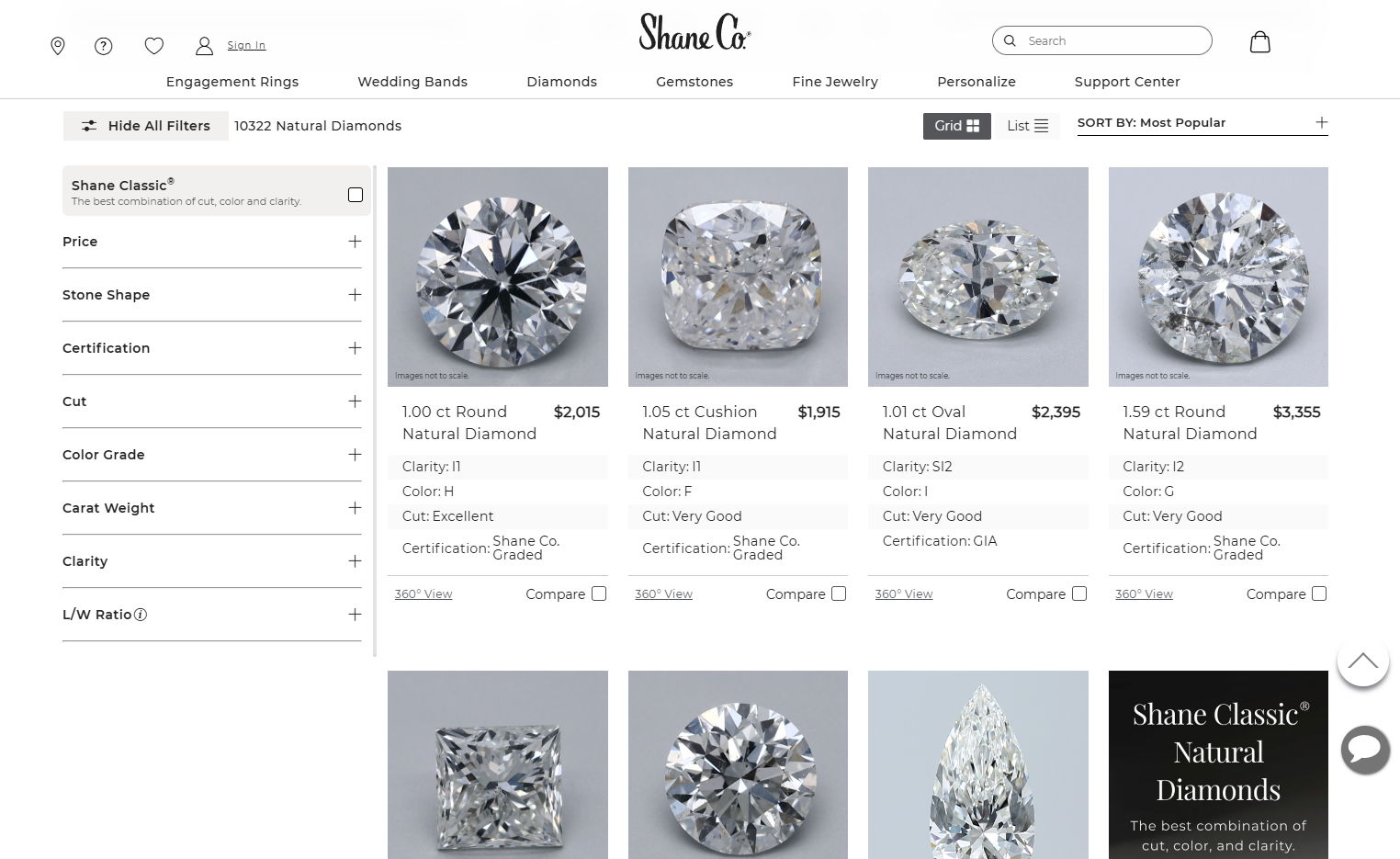
Shane Co. still gives you plenty of ways to build a ring. Its loose-diamond inventory includes GIA-graded stones in the major shapes, and its engagement-ring process lets you choose a stone and setting rather than limiting you to ready-made rings. Someone who wants a jeweler involved earlier may prefer having another person help narrow those decisions rather than doing most of the filtering alone.
For the way I shop, Blue Nile has the edge. I already know I want to sit at home and compare stones until I have the field down to a handful.
Pricing
By the time I get that far into the weeds, comparing an actual stone at each retailer tells me a lot more than trying to decide which company is “cheaper” in general.
At time of writing, Blue Nile had a GIA-graded 1.00-carat round diamond with H color, SI1 clarity and a Very Good cut listed at $2,436. Shane Co. had one with the same headline grades listed at $2,815. That doesn’t mean Blue Nile will always be cheaper, but in this comparison the difference was $379, which is enough that I would start looking closely at what, if anything, I was getting for the extra money. Blue Nile also offers a diamond price guarantee on qualifying comparable loose diamonds, so I would compare before assuming the listed price is the end of the conversation.
I wouldn’t call the two stones identical just because those four specifications match. Diamonds with the same basic grades can still have different proportions, fluorescence, symmetry, polish and inclusions, and Shane Co. points this out in its own diamond education. It is easy to lose sight of that when you are staring at four grades on a screen.
I would also compare the finished-ring price instead of getting so focused on the loose diamond that I forget there is still a setting to buy. Pavé, a hidden halo, more metal or more intricate detailing can change the total pretty quickly. The setting also affects what kind of wedding band will sit comfortably beside it, so I would look at the engagement ring and band together before getting too attached to a setting on its own.
Shopping Experience
If I were shopping for an engagement ring again, I would:
- Narrow my options to three or four stones before talking to a jeweler.
- Try my preferred diamond shape on my actual hand.
- Check how high the setting sits and whether it catches easily.
- Make sure the wedding band will sit comfortably beside it.
Blue Nile is still the more online-first experience to me, although both companies now give you ways to shop remotely and get help from an actual person. Blue Nile’s non-commissioned jewelry specialists can help by phone or through virtual appointments, and there are physical showrooms if you decide you want to see rings in person.
I like having the online part first because it gives me room to learn without feeling rushed. If I drop one clarity grade and save several hundred dollars, I can look at the stones and decide whether I care. If getting slightly more carat weight pushes me into a setting I like less, I can see that before somebody is standing across a counter waiting for an answer.
If I were doing this again, I’d probably make myself a shortlist before involving anyone else. Maybe three or four stones that are close enough in size and quality that I can understand what I am gaining or giving up with each one. I’d still try rings on before spending several thousand dollars, especially if I had never worn the shape I thought I wanted. Engagement-ring photos are helpful, but hands are weird. The same shape can look completely different depending on your fingers, your nail shape, the width of the band and the proportions of the stone. Pear worked really well for my hand, but I could easily see someone saving pictures of pear rings for months, trying one on, and immediately deciding they are an oval person instead.
Trying rings on is also when I would pay attention to how high the setting sits. I did not think much about that before wearing an engagement ring every day, but it affects how often you bump it into things, whether it catches on sweaters, and how naturally a wedding band sits beside it.
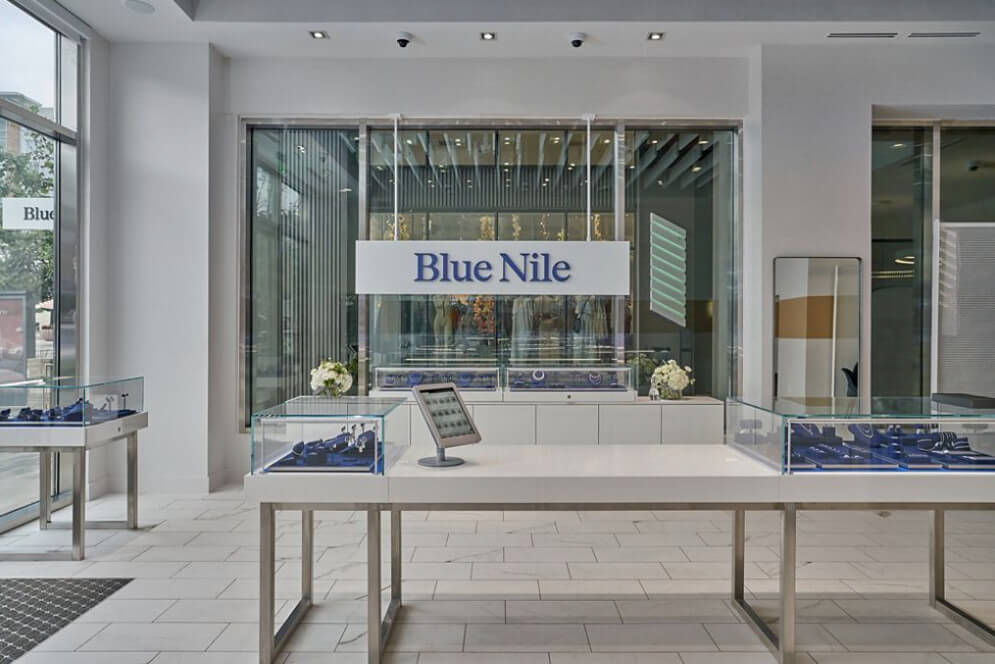
Blue Nile has another advantage for me personally because there is a showroom at Somerset Collection in Troy, Michigan, where shoppers can see and try on jewelry and work with a jeweler in person. Shane Co. offers virtual appointments and online consultants, but its store footprint does not include Michigan. If I lived five minutes from a Shane Co., that would change how I looked at this part of the comparison.
Shane Co. seems to expect the jeweler to be more involved throughout the process. Its consultants are available online and in stores, and you can work through the center stone and setting with someone instead of doing all of that filtering yourself. I can see that being a relief if you are proposing and the instructions you received were basically, “I like round diamonds and gold, good luck.”
There are plenty of people who do not want 100,000 diamonds to choose from. They want someone who knows what they are looking at to put three good ones in front of them and explain the differences. I like researching enough that I would rather do the first pass myself and bring in a jeweler once I have narrowed things down.
You might also be interested in: Blue Nile: Is It Legit?
Returns and Resizing
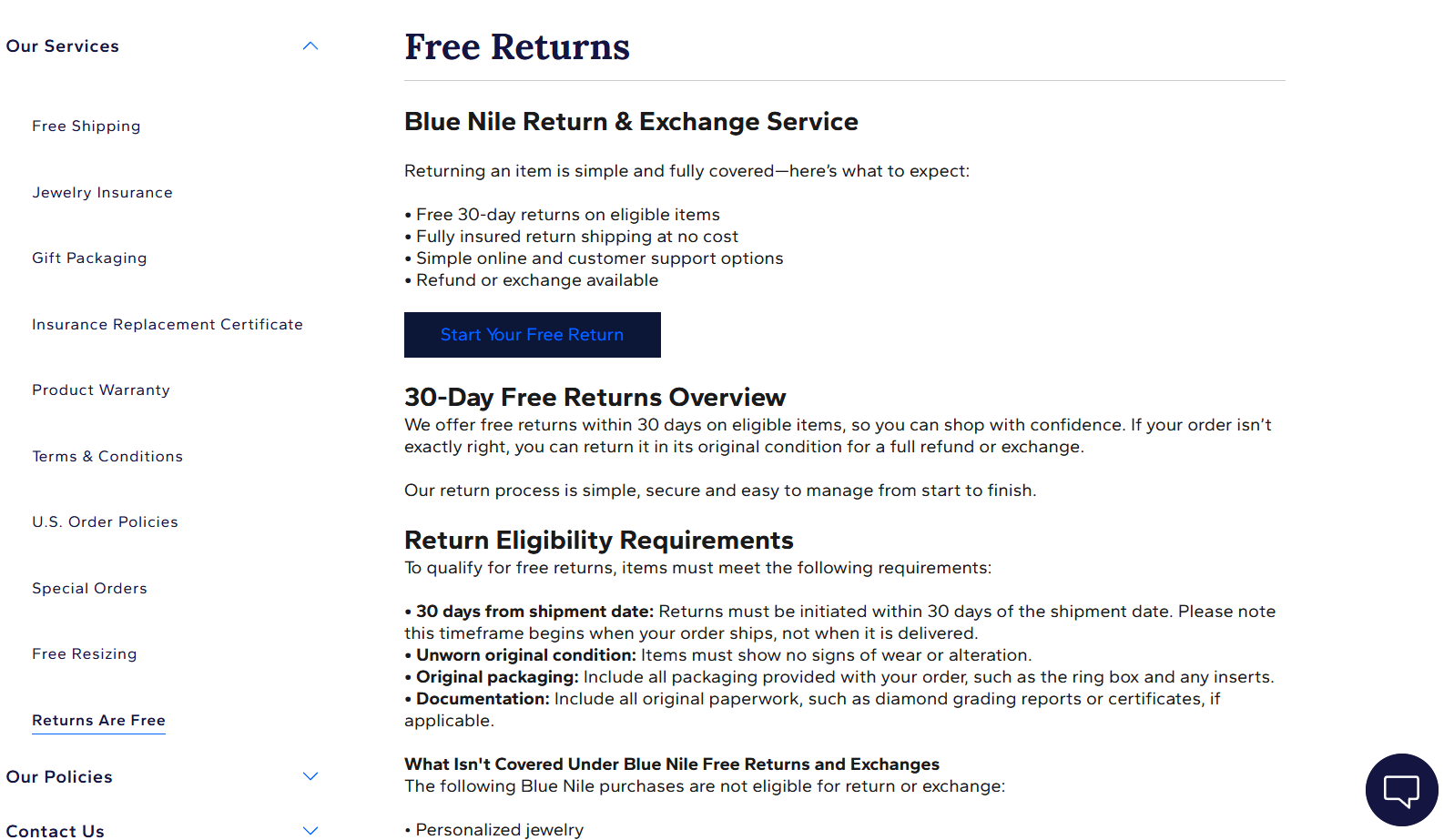
Blue Nile offers a 30-day return policy on eligible purchases. Shane Co.’s standard return window is 60 days. If you are proposing with a ring the other person has never seen, having twice as much time to discover that you guessed wrong on the style or size is not a small perk.
I care about sizing in particular because I managed to give my future husband all my style notes and still forgot to give him my ring size. The ring was so tight the morning after we got engaged that my finger was not happy. Years later, after I lost weight, it went the other direction and slipped off in a grocery store. I heard it hit the floor and found it, thankfully, but I have never looked at resizing policies quite the same way since.
Blue Nile offers one complimentary resizing during the first year on eligible rings, up or down two sizes when the design allows it. Some styles, including certain eternity, tension and alternative-metal rings, cannot be resized under that policy. That would have solved my original sizing problem, although now I would also ask how easily the setting can be resized later before choosing one. Some designs give you much less flexibility if your ring size changes again.
Warranty and Lifetime Care
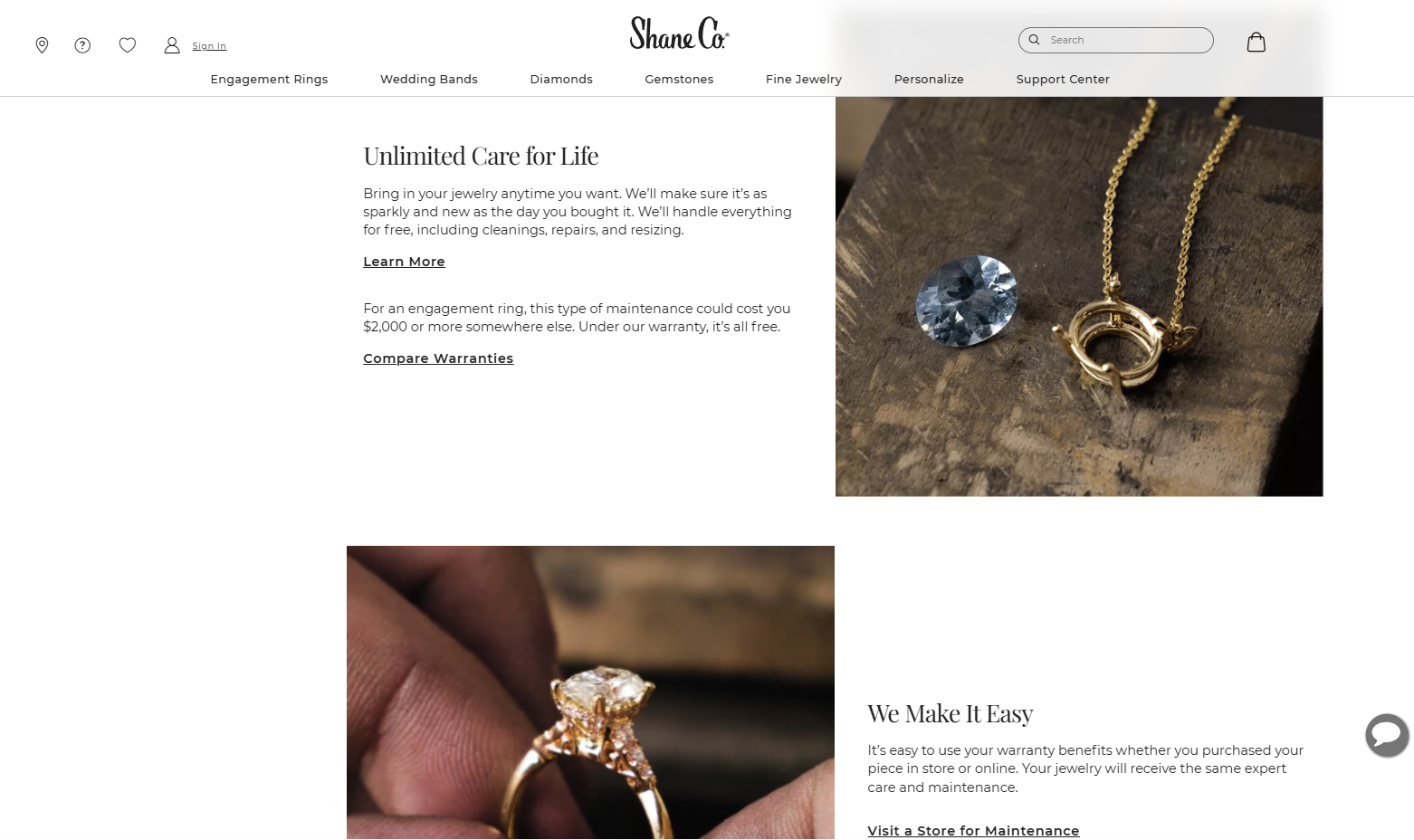
Shane Co. goes further. Its All-Inclusive Free Lifetime Warranty covers resizing, maintenance and repair work, cleaning and inspections, polishing and qualifying lost-stone replacement for life.
The main catch is that Shane Co. requires preventative maintenance about every six months to keep the warranty protections active, and qualifying center stones that fall out can be replaced when that maintenance schedule has been followed. You can visit a store or ship jewelry to Shane Co. for service if you do not live nearby.
Shane Co. has the better standard service package, but you have to participate in it. I would put those six-month checks in my calendar immediately because I know how six months turns into eighteen months when nothing seems wrong with the ring.
If I lived near a Shane Co. store, this part of its offering would carry a lot of weight for me. Walking into a store for a cleaning and inspection twice a year is easy enough. Packaging up my engagement ring and shipping it somewhere twice a year feels like something I am much more likely to procrastinate.
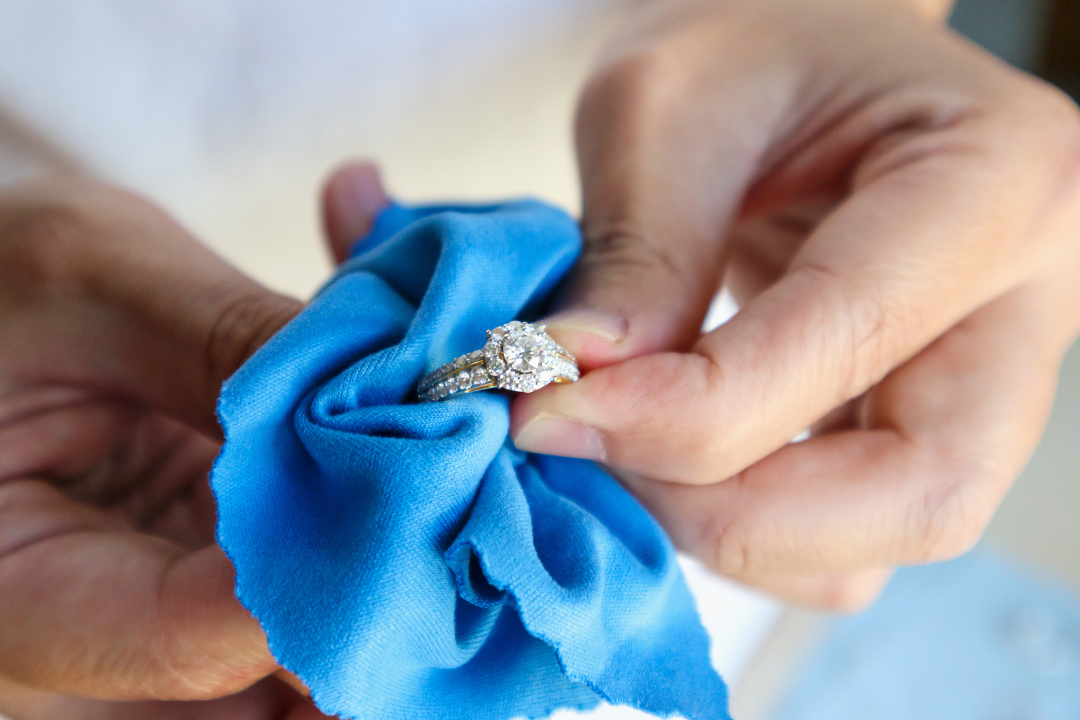
Blue Nile recommends having jewelry cleaned and inspected about every six months too, but its standard warranty works differently. The limited lifetime warranty covers manufacturing defects, while ordinary wear, accidental damage, loss and theft are excluded. Cleaning, inspection and prong tightening remain complimentary for as long as you own the jewelry.
Neither company’s standard warranty replaces jewelry insurance if the entire ring is lost or stolen, so I would still want separate coverage regardless of where I bought it.
I also take my rings off for farm chores because I have no desire to test an engagement-ring warranty against mud, hay, or an animal that weighs more than I do. Even with normal wear, though, fingers change size, prongs loosen and rings get knocked into things. After dealing with my own sizing issues, I pay a lot more attention to long-term service than I did when I first got engaged.
Shane Co. wins on lifetime care for me, especially for someone who has a store close enough that keeping up with the maintenance schedule feels easy.
So, Which One Would I Choose?
I’d start with Blue Nile if you:
- Want a much larger diamond selection.
- Like narrowing down stones and comparing prices online yourself.
- Want the option to research online and still see rings in person at a showroom.
- Would rather put your budget toward the stone you prefer than pay more primarily for broader lifetime coverage.
I’d look harder at Shane Co. if you:
- Want more help narrowing down your choices.
- Prefer a longer return window.
- Want one jeweler handling resizing, maintenance and repairs over time.
- Live close enough to a Shane Co. store to make the 6-month maintenance schedule easy.
For me, the part of engagement-ring shopping I care most about happens before the ring ever needs any kind of service. I want enough selection to be picky, I want to see what each specification is costing me, and I want to put more of the budget toward the parts of the ring I will notice every day. That is why Blue Nile would get my first search, and this time, somewhere between choosing the pear shape and comparing clarity grades, I would remember to provide the ring size.