

- Brilliant Earth vs KAY Jewelers - September 29, 2026
- Blue Nile vs Helzberg Diamonds - September 10, 2026
- Oval vs Pear Engagement Rings: Which Should You Choose? - September 10, 2026
Today, buying diamonds online is, actually, very easy.
You don’t have to be a gemologist to choose the right diamond. However, you do need to pay attention to avoid an unpleasant surprise when the diamond arrives at your house. As a jewelry designer and diamond expert I’ll help you to buy a diamond online safely.
The two fears I hear most from people buying a diamond online for the first time are straightforward: they are worried about receiving a fake, and they are worried about overpaying for something they cannot properly evaluate.
Both are legitimate concerns, but they’re also both solvable. Let’s talk about how to know what you’re really looking for when choosing a diamond online.
Why Certification Is Non-Negotiable
Before you evaluate anything else about a diamond, you need to confirm it has a grading report from a recognized laboratory. This is not optional.
The GIA, or Gemological Institute of America, is the gold standard. A GIA report tells you the diamond’s exact weight, measurements, cut grade, color grade, clarity grade, and includes a plotting diagram of its inclusions. Every GIA-certified diamond also has a unique report number, which you can verify directly on GIA’s website. When your diamond arrives, that number should match exactly what you saw in the listing.
This matters for two reasons. First, it confirms the diamond you bought is the diamond you received. Second, it is the only reliable way to determine whether a diamond is natural or lab-grown, since the two are visually identical.
IGI, the International Gemological Institute, is also widely accepted, particularly for lab-grown diamonds. What you want to avoid are grading reports from lesser-known laboratories with no international standing. These reports often inflate quality grades, which means the stone is priced above what it is actually worth.
A simple rule: if the diamond does not come with a GIA or IGI certificate, keep looking.
How to Read the “4Cs”
One of the qualities that differentiates a diamond from other gems is the possibility of determining its quality through certain rules. The characteristics that determine its quality and therefore its price are: Color, Carat, Clarity and Cut.
Let’s take a quick look…
Color: What the Scale Actually Means
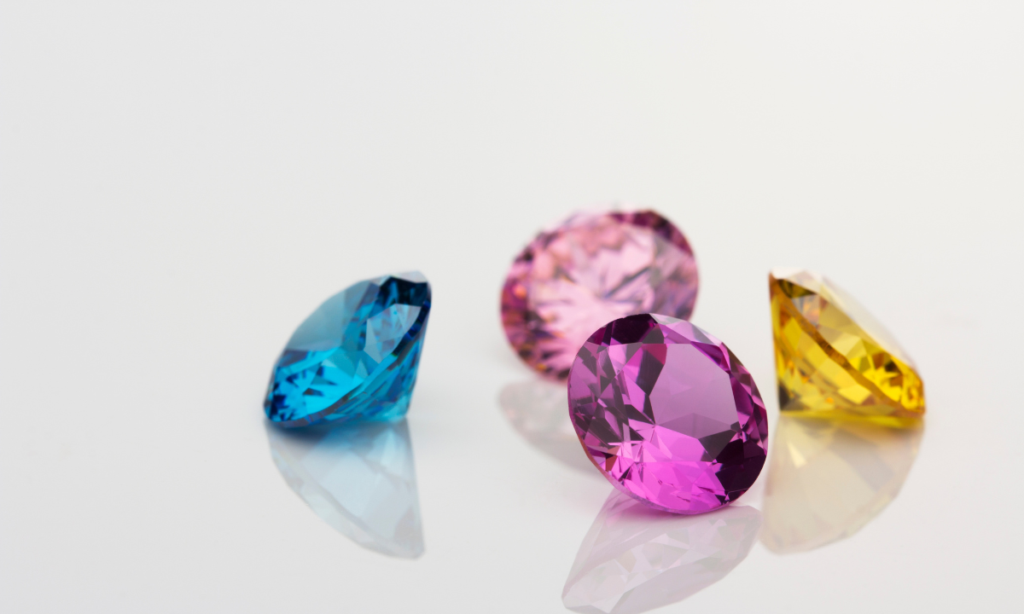
Color runs on a scale from D, which is completely colorless, to Z, which has a visible yellow or brown tint. For a colorless diamond, I recommend staying between D and G.
One practical note: if you set a colorless diamond in yellow gold, the metal can cast a warm reflection onto the stone. Platinum or white gold prongs preserve the color grade as graded.
Clarity: Where Inclusions Matter Most
Clarity refers to the inclusions, or internal characteristics, inside the stone. Where they sit matters more than how many there are.
When you look at the certificate plotting diagram, check that the inclusions are not sitting directly on the table, which is the flat top surface of the diamond. That is where they will be most visible to the naked eye.
Cut: The Quality Grade Worth Paying For
Cut is the grade given to the craftsmanship of how the diamond was shaped.
A well-cut diamond reflects light properly and looks brilliant. Grades run from Excellent to Fair.
If I were you, I wouldn’t go below Very Good.
Carat: The Weight Threshold Trick That Saves You Money
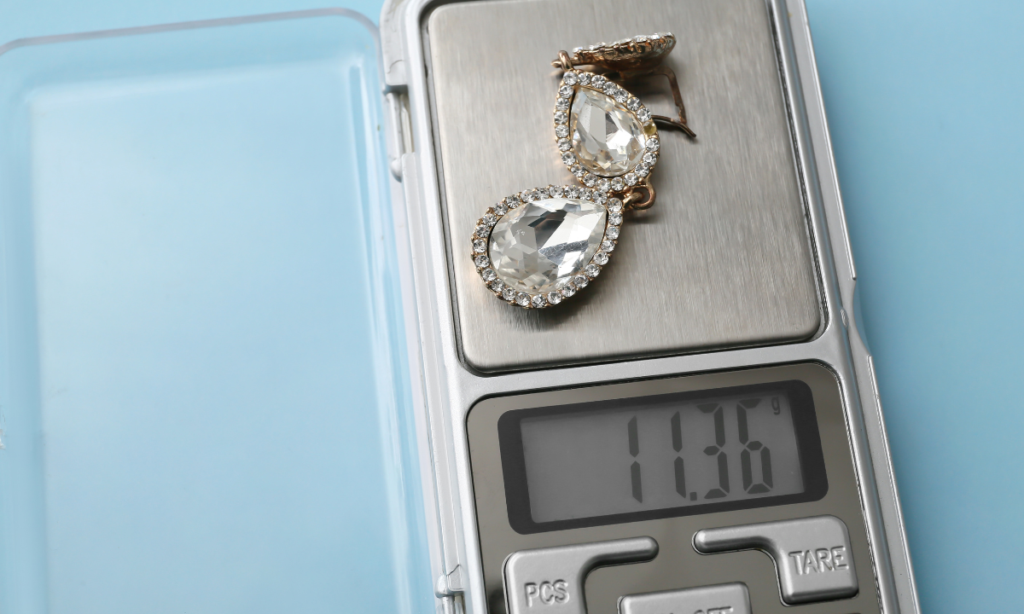
Carat is all about weight, not size.
The pricing jumps sharply at certain thresholds: 0.5 carats, 1 carat, and their multiples. If your budget is close to one of those marks, consider a 0.9 carat stone instead of a full carat.
Remember, the size difference is not visible, but the price difference often is.
What Makes an Online Diamond Retailer Worth Trusting?
To buy safely, it’s important to know who’s selling you the diamond. Ultimately, what matters is that you receive the product you chose when you pay. And in that case, the only thing that can guarantee that is the seller.
Research the brand before you buy, read reviews, and find out how long they’ve been in the market. Perhaps it’s the part that takes the most time, but I would say it’s also the most important.
The website is the online display of the jewelry label, so it has to be appealing to make us want to make a purchase. However, aesthetics isn´t everything, since when it comes to diamonds, there are certain characteristics that must exist for the website to be trustworthy.
Image and Video Quality
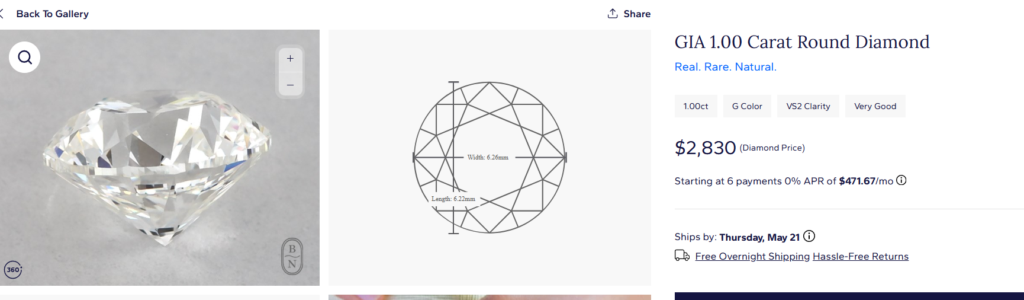
You cannot hold the diamond before you buy it, so the website needs to do that work for you. Look for high-resolution photography and 360-degree video of the actual stone, not a stock image or a sample photo.
If the listing says sample image, that is a problem.
You should also be able to see a size reference that shows how the diamond looks relative to a hand or finger. This is basic, and good retailers provide it without exception.
Inventory Transparency and Ethical Sourcing
Knowing where a diamond comes from is an important part of buying responsibly.
Conflict diamonds (also known as blood diamonds) are stones mined in war zones and sold to finance violence and exploitation. That’s why transparency and traceability matter when shopping for diamonds online.
A reliable seller should follow the Kimberley Process, the international certification system designed to track diamonds and confirm they were sourced through legitimate channels. While traceability standards have improved significantly, it’s important to understand that natural diamonds cannot always be guaranteed as 100% fully traceable.
When browsing online inventories, use filters to select diamonds with GIA or IGI certification. Many marketplaces list stones from multiple suppliers, and not all diamonds include independent certification.
Choosing a certified diamond adds an extra layer of confidence in quality and authenticity.
Customer Service and Return Policies

Strong customer support is essential when purchasing jewelry online.
Buyers often have questions about diamond quality, certifications, sizing, or warranties, so access to knowledgeable assistance is a good sign of a trustworthy retailer. If a brand offers little or no direct customer support, it may be worth reconsidering the purchase.
Clear return and warranty policies are equally important. Reputable sellers typically cover issues such as manufacturing defects, incorrect orders, or loose stones, though coverage varies depending on the item and the terms of the warranty.
Before purchasing, carefully review the return window, repair coverage, and warranty exclusions, so you know exactly what is and isn’t included.
The Online Diamond Sellers Worth Bookmarking
Blue Nile
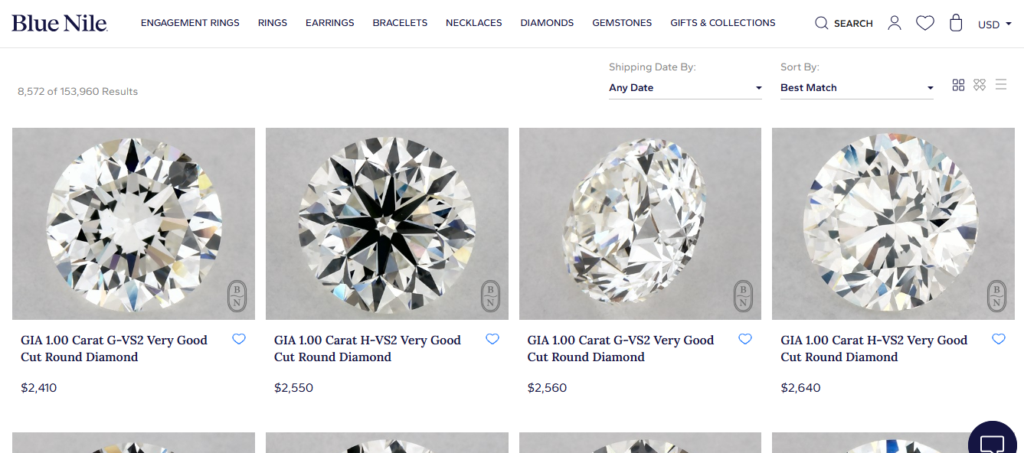
If you’re buying a diamond online for the first time, Blue Nile is one of the strongest places to start.
The platform is known for its massive inventory of certified diamonds, detailed filtering system, and high-quality imagery that makes comparing stones much easier.
Unlike many traditional jewelers, Blue Nile operates with a large virtual inventory model, which allows shoppers to browse far more diamonds at competitive prices.
Best for: Engagement rings, first-time buyers, large certified inventory, easy comparison shopping.
Rare Carat
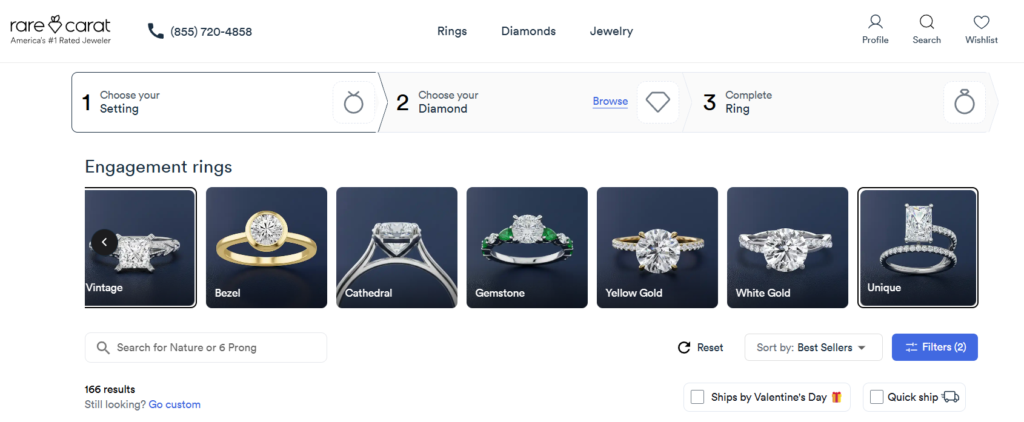
Rare Carat works differently from most diamond retailers because it functions more like a diamond comparison marketplace. Instead of selling only its own inventory, it aggregates listings from multiple suppliers and uses AI-based scoring tools to help shoppers evaluate value and quality.
Best for: Budget-conscious buyers, comparing prices across sellers, learning the basics of diamond quality.
Brilliant Earth
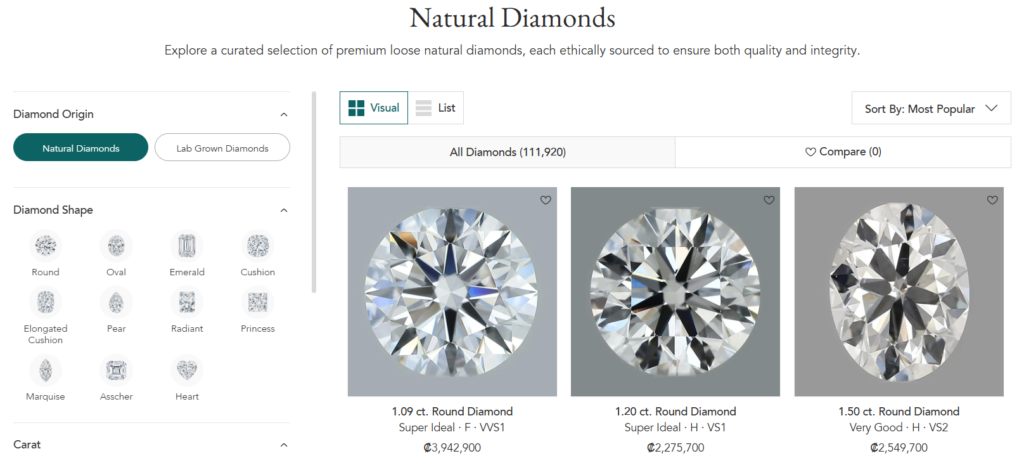
Brilliant Earth has built its reputation around ethical sourcing, modern design, and alternative diamond options, including lab-grown diamonds and fancy shapes. The brand is especially appealing for shoppers who care about sustainability or want something less traditional.
Best for: Ethical sourcing, unique styles, fancy-shaped diamonds, lab-grown diamonds.
Ritani
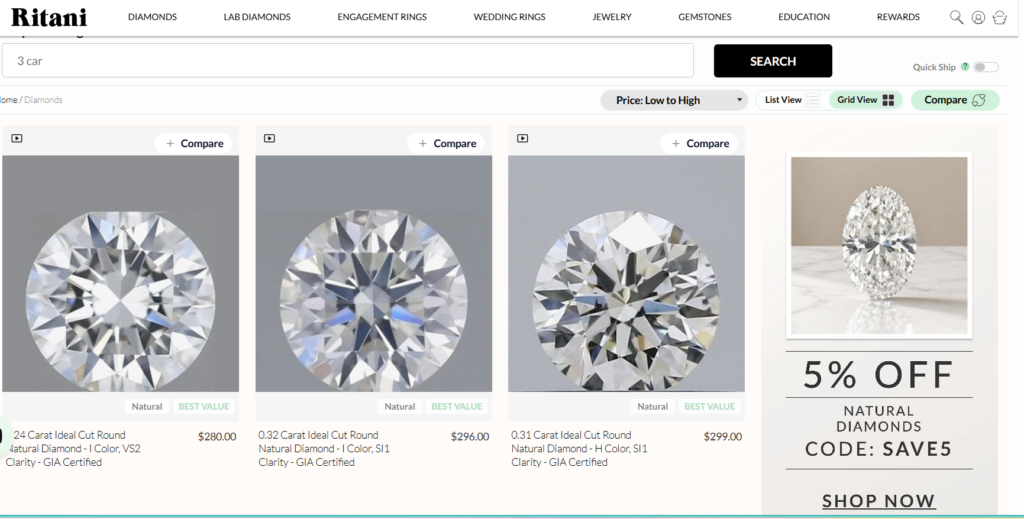
Ritani is popular among experienced online diamond shoppers because its loose diamond pricing is often extremely competitive. The platform focuses heavily on transparency, and many buyers use it specifically to compare loose diamond prices before purchasing a setting elsewhere.
Best for: Loose diamonds, price comparison, value-focused shoppers.
How to Tell if a Diamond May Not Be Authentic:
No Certification
A missing certificate does not automatically mean a diamond is fake, but it does make verification difficult. Without an independent grading report, there is no reliable way to confirm the diamond’s quality or authenticity without additional testing from a gemological laboratory.
Certification From an Unknown Laboratory
This can be a warning sign. Some lesser-known labs use softer grading standards, which may make a diamond appear higher quality on paper than it actually is. This can result in inflated pricing for a lower-quality stone.
No Fluorescence
A diamond not fluorescing under UV light does not mean it is fake. Many natural diamonds have no fluorescence at all. Additional gemological testing is needed to determine whether a stone is natural, lab-grown, or another gemstone entirely.
Completely Free of Inclusions
Natural diamonds form over millions of years under extreme pressure, so some level of inclusions or internal characteristics is expected. A stone that appears perfectly flawless should be examined more carefully, especially if marketed as a natural diamond.
Extremely Intense Brilliance or “Fire”
If a stone displays an unusually high amount of rainbow-colored sparkle, it may be moissanite rather than diamond. Moissanite typically shows significantly more fire than a diamond, which can make the difference noticeable when the two stones are compared side by side.
Final Thoughts: What to Do Before You Click Buy
I’m never afraid to buy a diamond online, but I do believe research is everything. Before making any purchase, I always spend time researching the seller carefully.
That means reading reviews, checking return policies, verifying certifications, and making sure the company is transparent about its inventory and sourcing practices.
When it comes specifically to diamonds, I never buy a stone without a GIA or IGI certificate. For me, certification is essential because it’s the only reliable way to confirm that the diamond I saw online is actually the one I receive. Any reputable online diamond seller should provide a grading report, because certification is what proves the stone’s authenticity and quality.
Buying a diamond online becomes much less intimidating once you know what to look for. As long as you avoid the major red flags and choose a trusted seller, the process is actually very straightforward. After that, it simply comes down to finding the diamond that feels right for you.