
- Brilliant Earth vs KAY Jewelers - September 29, 2026
- Blue Nile vs Helzberg Diamonds - September 10, 2026
- Oval vs Pear Engagement Rings: Which Should You Choose? - September 10, 2026
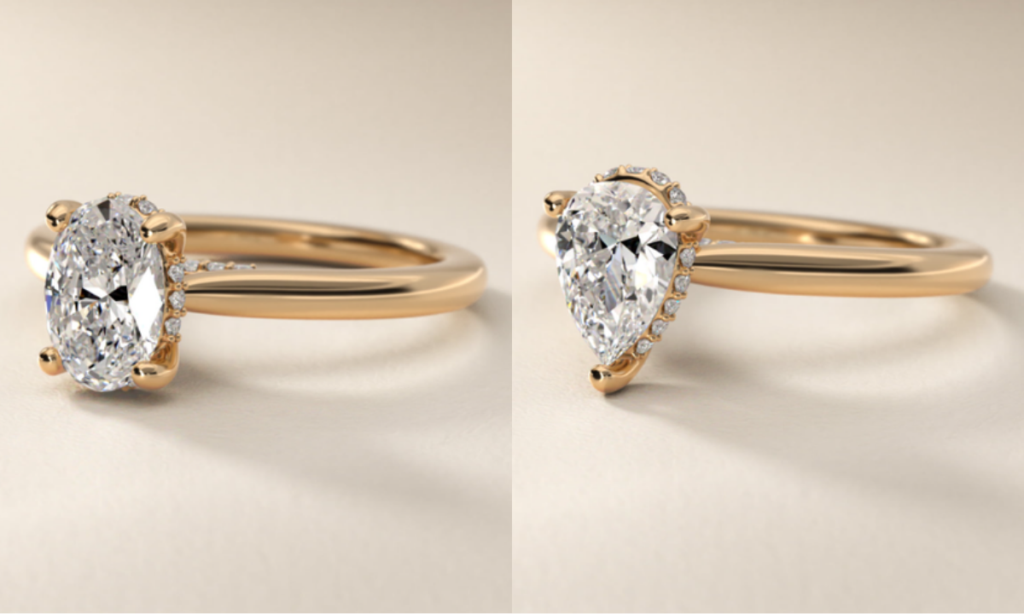
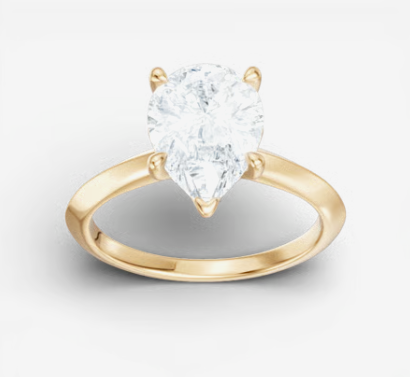
The first thing you see on an engagement ring is the center stone, which is why you want that stone to represent you, to tell your story, and to set you apart. The classic round brilliant is classic for a reason, but oval and pear diamonds are great alternatives that elongate your fingers and give your ring a distinctive look. The oval shape possesses the roundness of a round brilliant diamond but is more elongated. Pear diamonds combine the shape of the marquise with the round brilliant; they feature a teardrop silhouette and high brilliance. But how do you choose between the two?
As a jewelry designer specializing in diamonds, I’m going to help you decide which diamond is best for you. In this guide, we will cover all aspects of both diamond shapes, including price, settings, where to buy them, and pros and cons, so you can decide which of the two is the right one for you.
Oval vs Pear: Chart Comparison
| Feature | Oval | Pear |
| Price | Less expensive per carat than a round brilliant | Less expensive per carat than a round brilliant |
| Symmetry | Symmetrical | Asymmetrical |
| Durability | High durability due to its rounded shape | There is a risk that the tip might splinter. |
| Settings | Halo, bezel, prong, three-stone | Halo, bezel, V-prong |
| Style | Modern and trendy | Elegant and romantic. |
Main Features
Price
Both the oval cut and the pear shape are less expensive than round diamonds; the latter is the best-selling shape but also results in the most waste during cutting, which is why its price is always higher. Between oval and pear, oval is currently more expensive due to its popularity in recent years.
Cut
It’s important not to confuse shape with cut. When we speak of oval and pear, we are referring to the shape. Whether or not the stone is of good quality depends on the cut.
All diamond shapes other than the round brilliant are called fancy shapes, and the GIA (the Gemological Institute of America) doesn´t provide a cut grade for them—though it does for the round brilliant. So, to determine the quality of a fancy-shape cut, you must rely on your own visual assessment.
For an oval shape: Focus on the sparkle; the stone’s brilliance must be highly attractive. If it passes the brilliance test, the next step is checking the stone’s symmetry. When you draw an imaginary line down the middle, both halves must be identical. It´s very important to find a stone with balanced proportions, so pay close attention to the culet (the bottom point at the base of a diamond) and ensure it is properly centered. Take a look at the girdle as well, which is the outer edge that separates the top part of the diamond from the bottom. You’ll want a girdle of medium thickness; a too-thick girdle makes the diamond heavier, while an extremely thin girdle may increase the risk of chipping.
For a pear shape: The steps are very similar for pear diamonds. Above all, the stone must have great brilliance, and it must be symmetrical in shape. The tip must be perfectly aligned with the center of the stone. I recommend paying extra attention to the cut quality of pear diamonds, because it is a difficult cut to achieve.
The Bow-Tie Effect
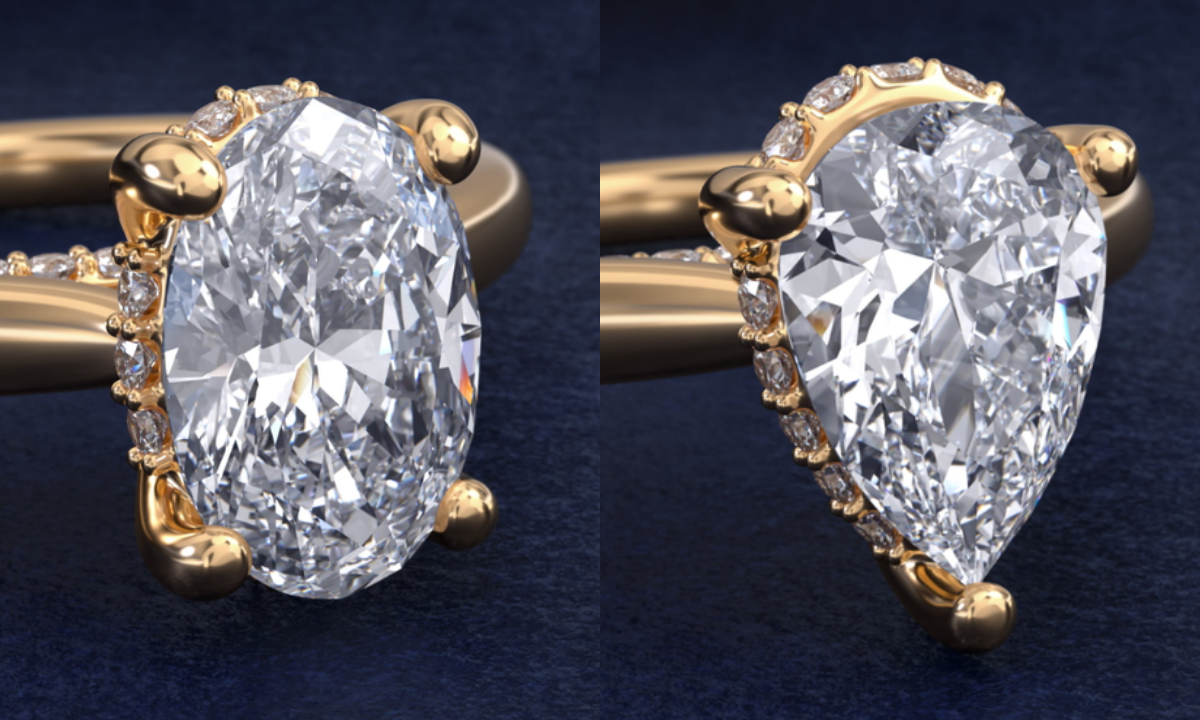
In elongated diamond shapes, a special effect often occurs that is not seen in the round cut: two black lines appear in the center of the stone resembling a bow tie. Many find it unflattering because it slightly dulls the diamond’s sparkle.
The bad news is that neither of these elongated shapes is immune. But all you have to do is pay close attention to whether the effect appears and how intense it is. If it’s barely visible, it’s a good diamond, but if the lines are very dark, then it’s better to choose another one. The only way to see the bow-tie effect is to move the diamond in the light; when buying online, you need to watch the 360° video, since you won’t be able to tell from a photo.
Clarity
When we speak of clarity, we are referring to the inclusions or streaks present in the diamond. The more of these there are, the lower the clarity, and consequently, the lower the quality of the diamond.
In the case of oval shapes, the inclusions must be located near the outer edges, and the center of the table (the flat surface) must be clear, because that is where they are most visible. And in the case of pear-shaped diamonds, there shouldn’t be inclusions near the tip, as it can chip, and you should also avoid inclusions in the center of the table.
Durability and Settings
The two shapes differ in terms of durability. Because the oval shape lacks sharp corners, it carries a lower risk of chipping. The pointed tip of pear diamonds makes them more prone to chipping and breakage, requiring greater care or the use of settings that provide good protection for the tip.
For your pear stone, a bezel setting protects the entire outline of the diamond, offering excellent security and reducing the risk of chipping. If you prefer lighter settings, you can opt for a prong setting, though you should take extra care to ensure the tip is well protected. A halo setting can also be appropriate.
For oval diamond rings, the goal is for the setting to provide extra brilliance and securely hold the stone, so I recommend a halo, bezel, prong, or three-stone setting.
Bezel: The most secure choice. A fine rim of metal completely wraps around the diamond’s edge.
Prong: This setting allows the most light to enter and maximizes shine. For pear diamonds, a V-shaped prong at the tip is recommended, as it provides greater protection.
Halo: The center gemstone is surrounded by a circle of smaller accent diamonds or gemstones, which provides extra sparkle.
Three stone: This setting features a larger center gem flanked by two smaller side stones; it’s all about maximizing shine.
Size and Style
Both oval and pear diamonds are brilliant shapes that look large for their carat weight. Compared to the classic round diamond of the same carat weight, elongated shapes will appear larger, which means you can allocate more of your budget toward higher carat weight or better quality.
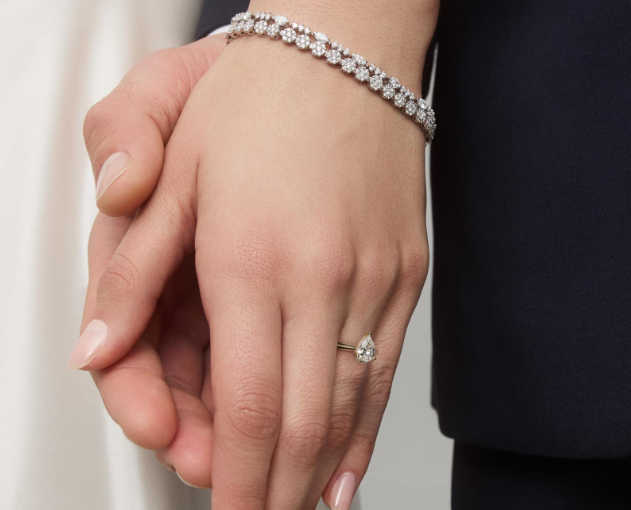
One of the advantages of an elongated diamond is its flattering effect on the hand. Because these diamond shapes are more elongated, they make the finger appear longer and more slender—leading many people to choose these shapes over the round diamond.
When it comes to oval diamonds, we need to consider the ratio, as it can range from more rounded to more elongated. The most popular ratio is typically between 1.30 and 1.50; measurements outside this range are less common. Ultimately, the best choice is simply the one you like best.
An oval ring has a modern, trendy look that elongates your fingers and is perfect for everyday wear. It’s also an excellent option if you like curved designs but don’t want the classic round diamond.
Pear diamonds maintain the slender look while adding a romantic and elegant style.
Where to Buy Them Online?
When you buy diamonds online, you need to see their brilliance and quality; therefore, the website must feature excellent images and 360-degree videos, and the diamonds must be certified by the GIA or IGI (two recognized laboratories).
Videos are very important for pear and oval diamonds, as the quality of these cuts is not reflected in the report, and the bow-tie effect can only be seen online via video, as it doesn’t always show up in an image.
These are my top suggestions for online jewelry retailers where you can find the best oval and pear engagement rings.
Blue Nile
Blue Nile has an extensive selection of pear and oval diamond rings. The brand’s advantage is its extensive inventory of both natural and lab-grown diamonds. Thanks to their images and videos, you can examine the diamonds in detail. Plus, every diamond comes with a GIA or IGI certificate.
Here you’ll find a variety of design styles, including the most popular and classic engagement ring styles. And if you don’t see exactly what you want, you can customize the design yourself.
Brilliant Earth
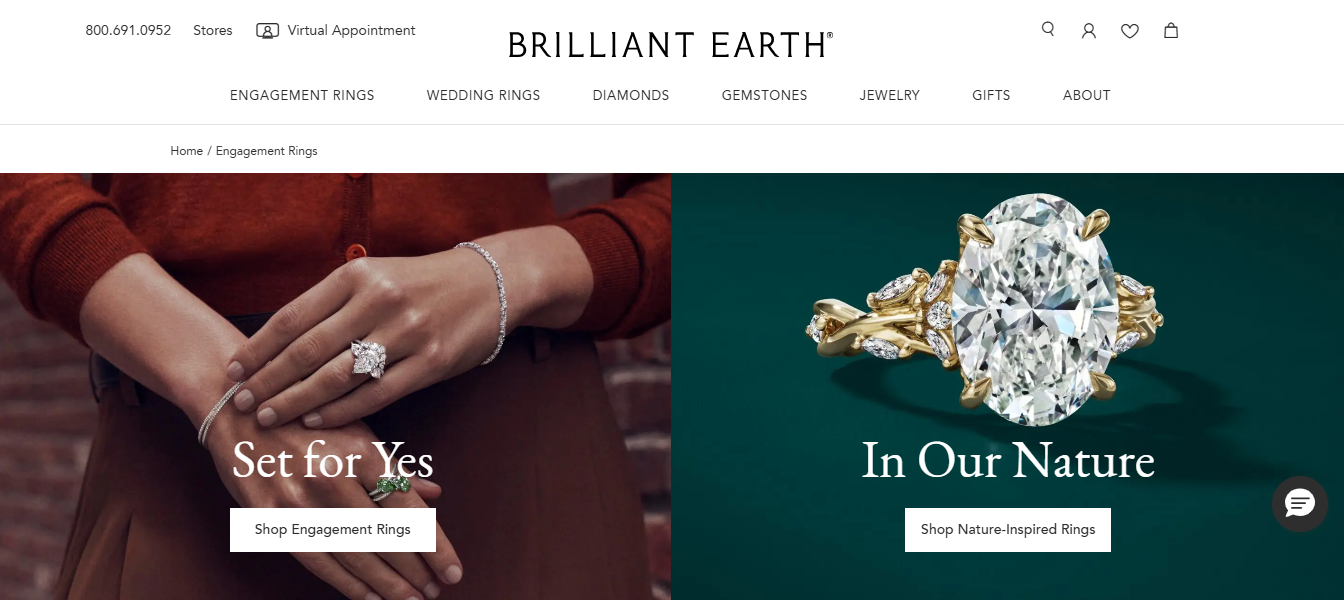
Brilliant Earth is another brand that stands out in the world of wedding jewelry. Both elongated shapes are available in natural and lab-grown versions. They also offer an interesting variety of rings with colored gemstones. Their ring styles are modern and minimalist, aimed at the modern, trend-conscious bride.
Grown Brilliance
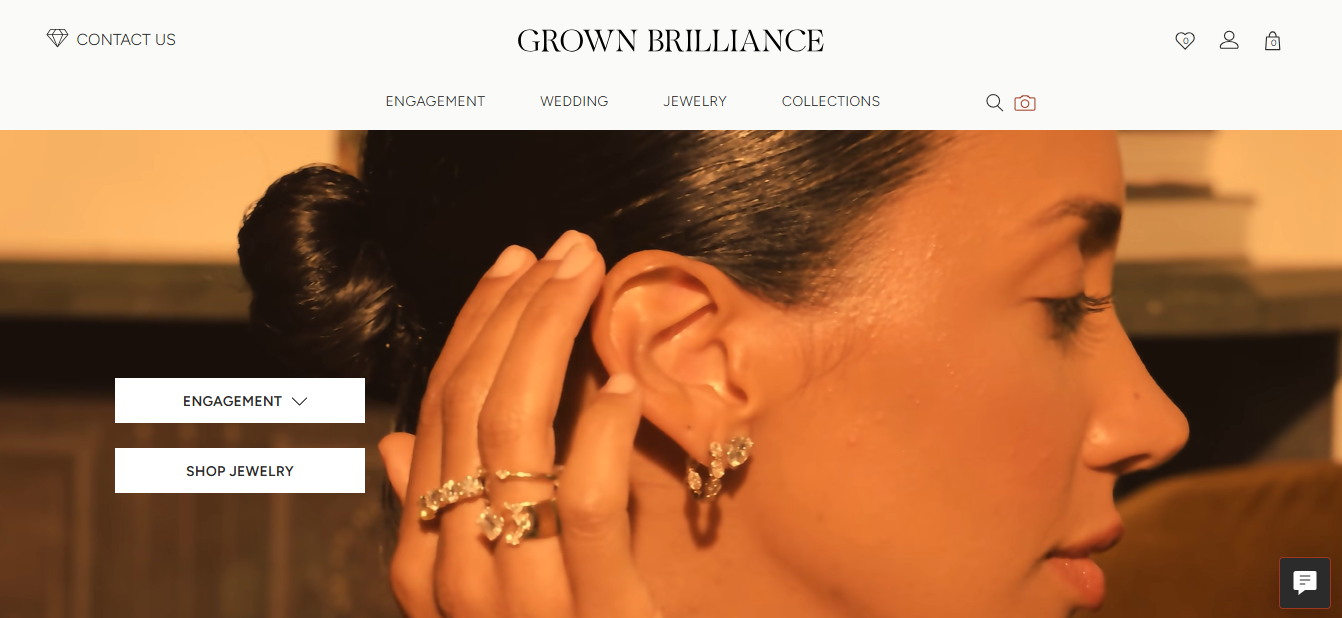
Grown Brilliance offers exclusively lab-grown diamonds, so if you’ve already decided that’s what you want, it’s a great place to look for your ring. They feature high-quality images and videos of the diamonds and offer stones certified by GIA and IGI.
Ritani
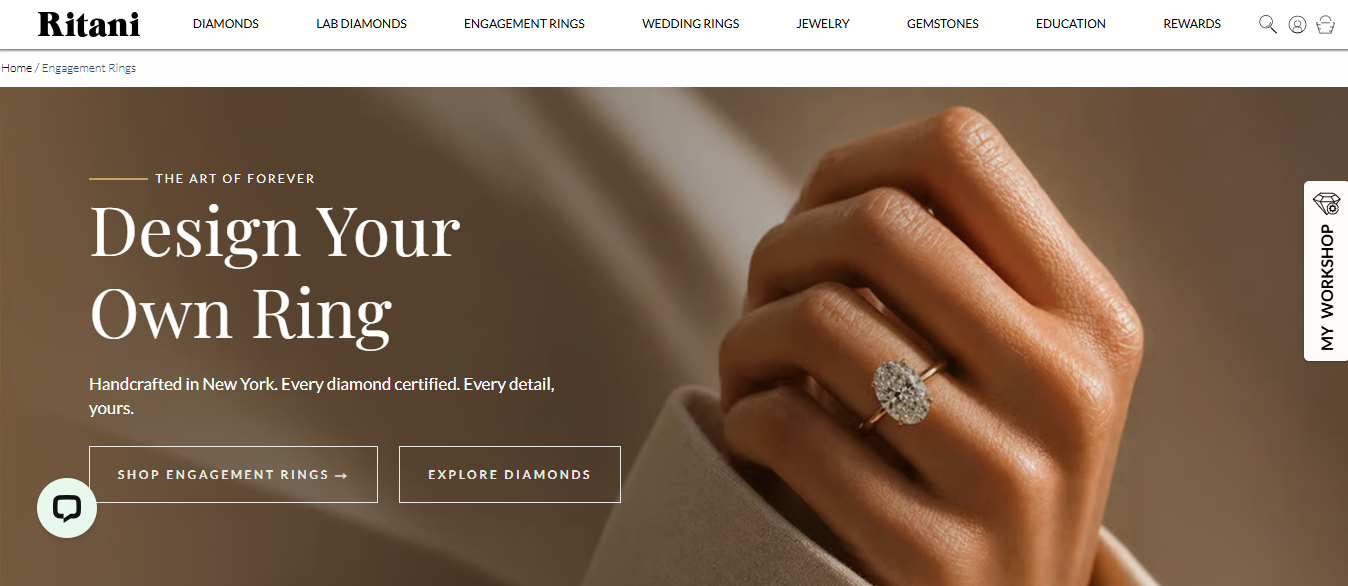
Ritani is a good option if you want to compare prices, as they have lower markups than other diamond sellers. You can find fancy diamond shapes here, though not every diamond in their inventory comes with a video.
Ritani offers very detailed search filters and carries grading reports from GIA for its natural diamonds, while their lab-grown diamonds come with both GIA and IGI certifications. Their ring styles are classic, rather than trendy or designer.
Oval Shape: Pros and Cons
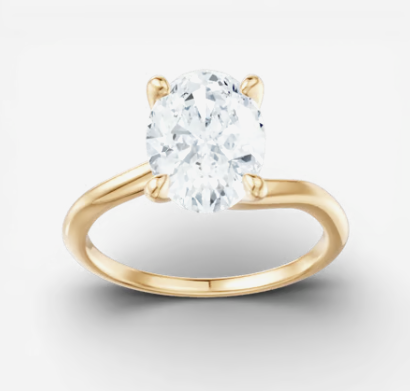
Pros
- Retains the roundness of a brilliant cut but with a more modern, less classic design.
- The elongated outline makes fingers appear longer and more slender.
- Looks larger than a round-shaped diamond of the same carat weight.
- No risk of chipping thanks to the absence of sharp tips.
- Costs less than a round diamond of the same quality and carat weight.
Cons
- The bow tie effect.
- Might sparkle slightly less than a round diamond.
Pear Shape: Pros and Cons
Pros
- Can be worn in various orientations. Some people wear it with the point facing their fingers, while others have it pointing downwards. There are also ring designs that position it horizontally, creating unique and distinctive looks.
- Looks larger than a round brilliant diamond of the same carat weight.
- Romantic and elegant.
- Costs less than a round diamond of the same quality and carat weight.
Cons
- The bow tie effect.
- Risk of chipping.
- Requires the cut to be symmetrical and well-proportioned.
- Fewer options available because it is a difficult shape to cut.
Final Thoughts
If one thing is certain, it’s that both shapes look fantastic in any engagement ring. They share many characteristics—some positives, such as a shape that makes the finger look more slender and a lower cost compared to the round cut; and some negatives, such as the bow-tie effect and the need to pay close attention to the shape’s proportions and symmetry (since these details do not appear in grading reports). However, their distinct styles set them apart, making them both unique.
Pay attention to all the technical aspects that determine a diamond’s quality, and at the end of the day, focus on the shape you like best. Find the shape that makes you smile, and enjoy the search for your diamond.