
- Brilliant Earth vs KAY Jewelers - September 29, 2026
- Blue Nile vs Helzberg Diamonds - September 10, 2026
- Oval vs Pear Engagement Rings: Which Should You Choose? - September 10, 2026
If you believe an engagement ring has to have a round cut diamond, it’s worth reconsidering. A bride can choose whatever cut she loves most, without being bound by tradition, and increasingly, that’s exactly what’s happening.
The princess cut, a contemporary square (or slightly rectangular) design known for its sharp edges and strong brilliance, has become the second most popular diamond cut after the round brilliant, and for good reason: it delivers a modern, distinctive look that still holds its own in terms of sparkle.
As a jewelry designer, I’ve watched demand shift toward less common cuts in recent years. Most of this comes down to personalization. Couples want a ring that reflects their individual style rather than simply following tradition, and the princess cut fits that shift perfectly, offering something that feels contemporary without sacrificing brilliance or value.
This guide covers everything you need to know before buying a princess cut diamond engagement ring, from what defines the cut and how to judge its quality, to where to buy one online and what to watch for before you commit.
What Is a Princess Cut Diamond?
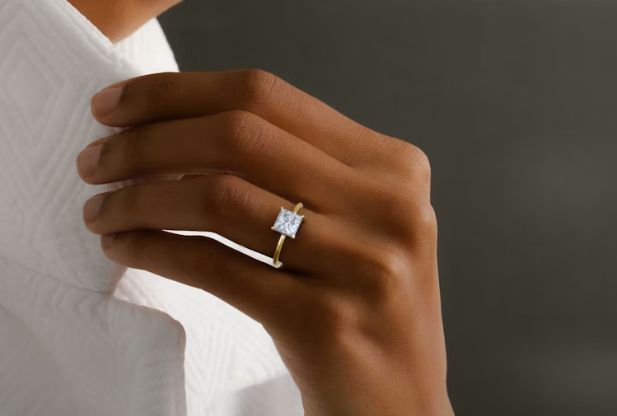
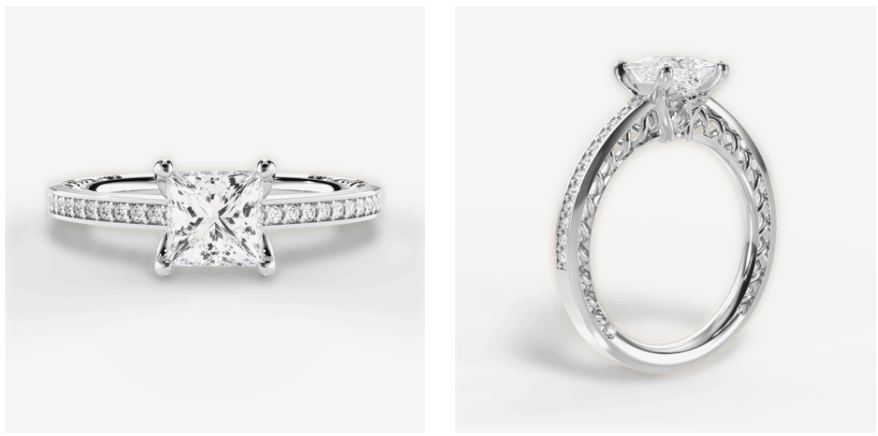
A princess cut diamond has a square or slightly rectangular shape with four pointed corners, creating modern lines and stunning sparkle. Princess cuts feature two to four chevron patterns and a distinctive fire thanks to their faceting.
There isn’t a fixed number of facets. They can range from 50 to 58, which creates a wide variety in scintillation, meaning the brightness and pattern of the sparkle.
A quick note on terms: fire refers to the colorful flashes of light a stone diffuses under light, while scintillation refers to the dynamic sparkle you see when the diamond moves.
The Best Settings for Princess Cut Diamonds
Pay close attention here: it’s crucial to choose a setting that protects the corners, since they’re the most likely part of the stone to chip or break if struck. The settings that best protect a princess cut are bezel, halo, and solitaire prong settings.
Are Princess Cuts Cheaper Than Round Cuts?
Yes, princess cuts are generally cheaper than round brilliant cuts. Round cuts waste roughly 50% of the original rough diamond during shaping, while princess cuts waste only 20% to 30%, meaning more of the original material is preserved.
Popularity also plays a role in price. Round cut diamonds remain the most sought-after, and demand drives price up. That’s one more reason to consider a less traditional cut if budget matters to you.
The Best Places to Buy a Princess Cut Diamond Online
1. Blue Nile
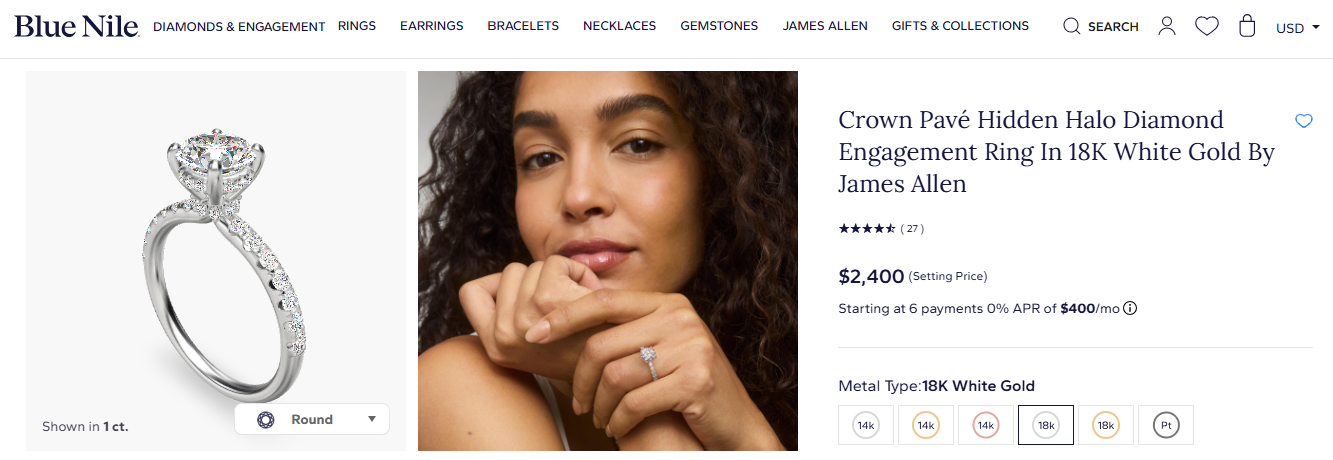
Blue Nile is a strong choice if you want a wide range of princess cut diamonds across different qualities, sizes, and price points. It has one of the largest online diamond inventories, with advanced filters that make it easier to narrow down options despite the volume. All diamonds come with GIA or IGI certification, and grading reports are available online so you can verify details like cut, color, clarity, and carat weight before buying.
One advantage of shopping Blue Nile is the ability to compare many diamonds side-by-side, which can help you find better value. The downside is that having so many options can feel overwhelming if you aren’t sure what diamond characteristics matter most. Blue Nile also offers both natural and lab-grown diamonds, making it a good fit for someone who wants flexibility.
Best for: Someone who wants the largest selection and enjoys comparing different diamond options.
2. Brilliant Earth
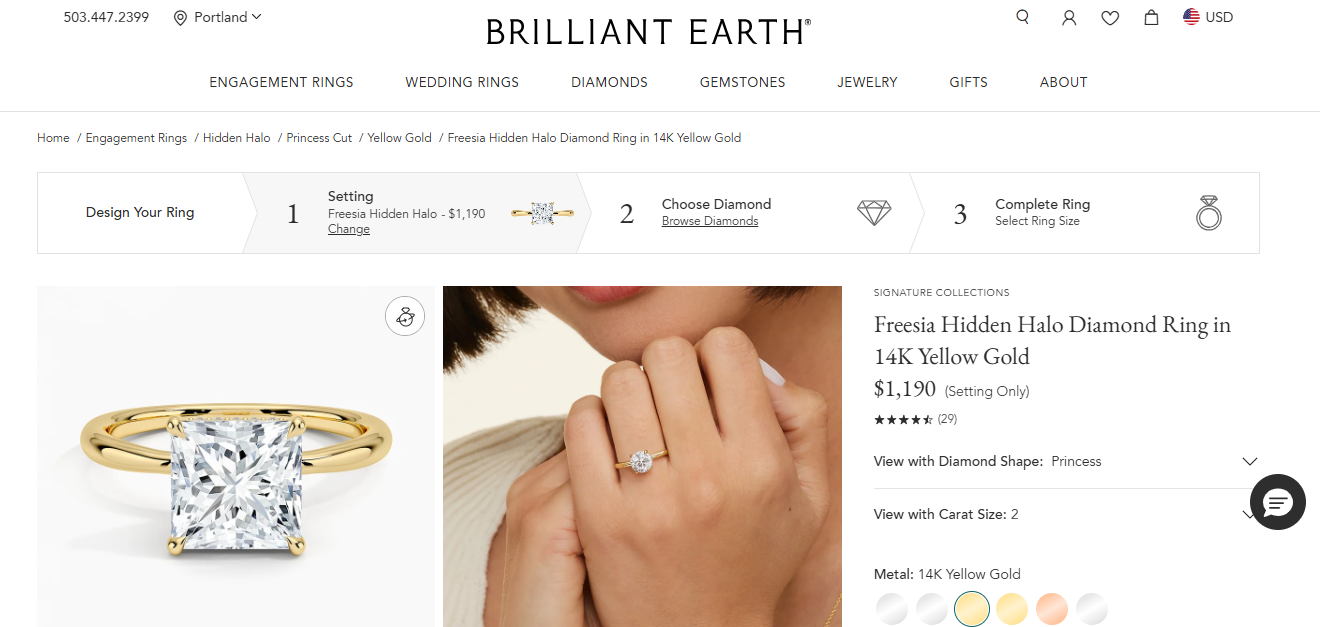
Founded in 2005, Brilliant Earth built its brand around making the diamond industry more sustainable and transparent. It offers a wide variety of natural and lab-grown princess cut diamonds, plus colored gemstones you can combine into a custom design. Its aesthetic leans modern, with organic shapes and unique settings that stand apart from traditional engagement rings.
A standout feature is its guided diamond finder tool, which simplifies the search process by helping you narrow down options based on your preferences. The tradeoff is that some buyers may find Brilliant Earth’s prices higher than comparable options elsewhere, especially for certain settings and diamonds.
Best for: Someone focused on sustainability, customization, and modern ring design.
3. Grown Brilliance
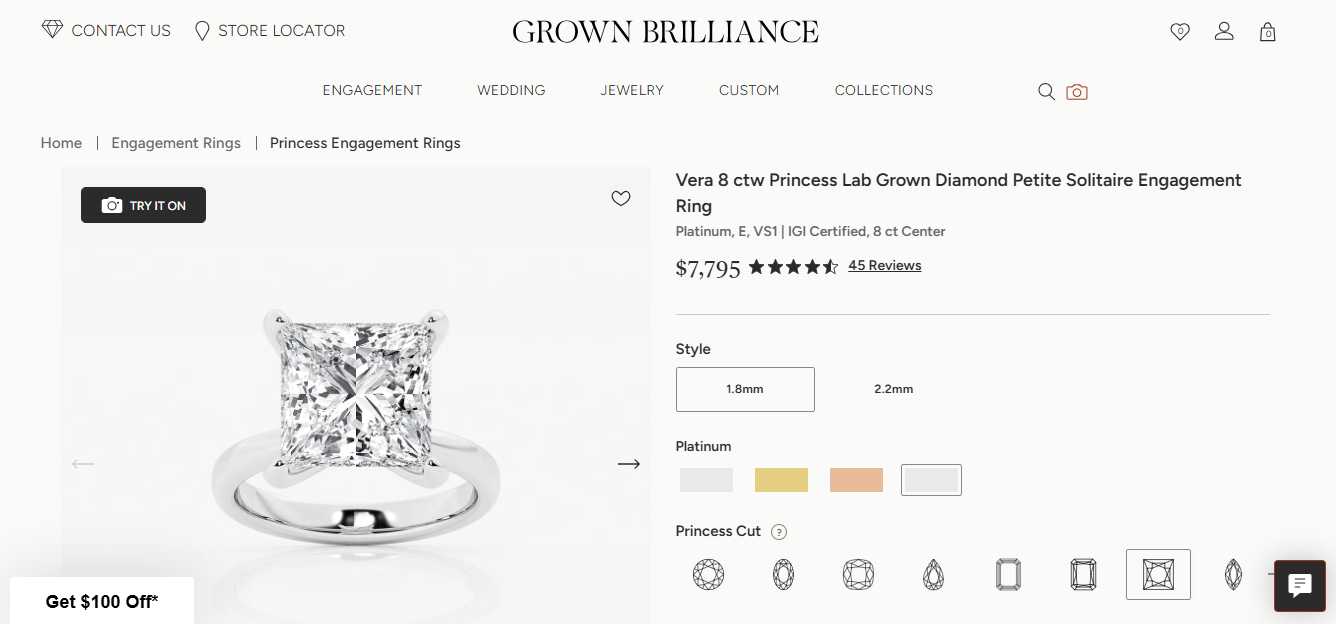
Grown Brilliance specializes exclusively in lab-grown diamonds, making it a strong option if you’ve already decided you want a lab-grown princess cut. Lab-grown diamonds typically cost significantly less than natural diamonds, which means you can often get a larger stone for the same budget. They are also chemically, physically, and visually the same as mined diamonds.
The main consideration with lab-grown diamonds is that they generally have lower resale value compared to natural diamonds. However, for buyers focused on getting the most size and quality for their budget, lab-grown diamonds can offer significant savings.
Best for: Someone who has already chosen lab-grown and wants a wide selection within that category.
4. Ritani
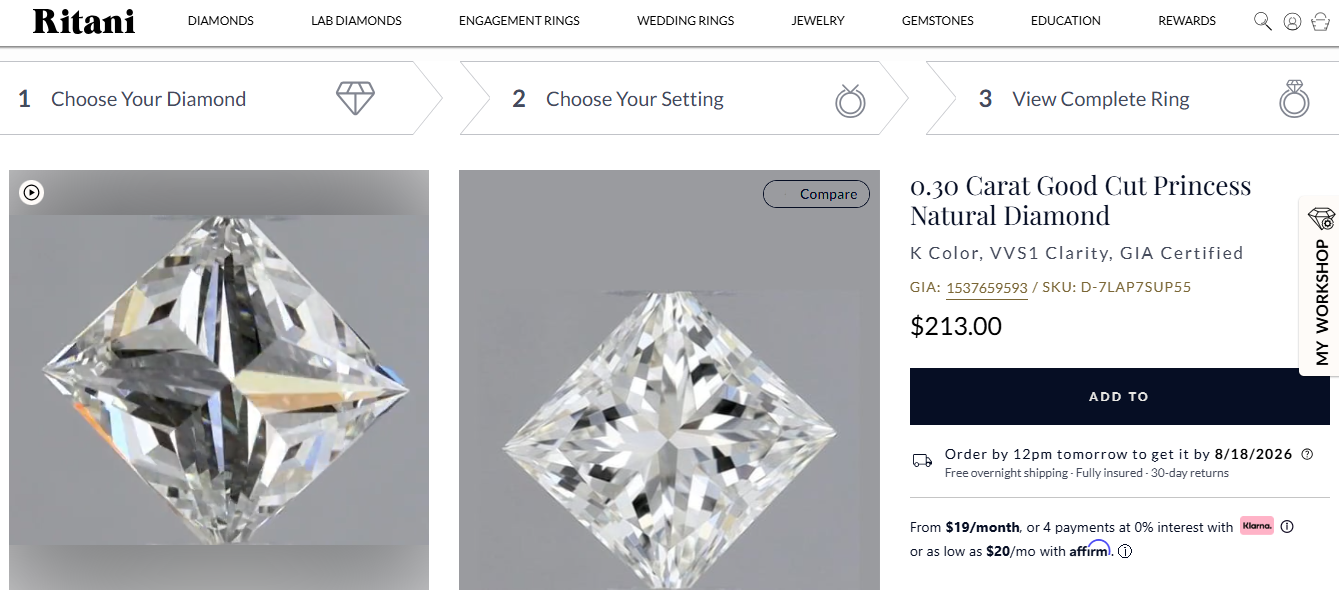
Ritani is worth considering if price is a major factor, since the site regularly offers promotions and competitive pricing. Its inventory includes many popular diamond shapes, including princess cuts, and it provides GIA grading reports for many natural diamonds.
The site may not feel as polished as some competitors when it comes to filtering tools and diamond imagery, which can make comparing options slightly more difficult. However, its pricing and transparent diamond details can make it a good choice for shoppers who are comfortable doing more research.
Best for: A price-conscious buyer who wants to compare diamond quality and find a good deal.
5. Clean Origin
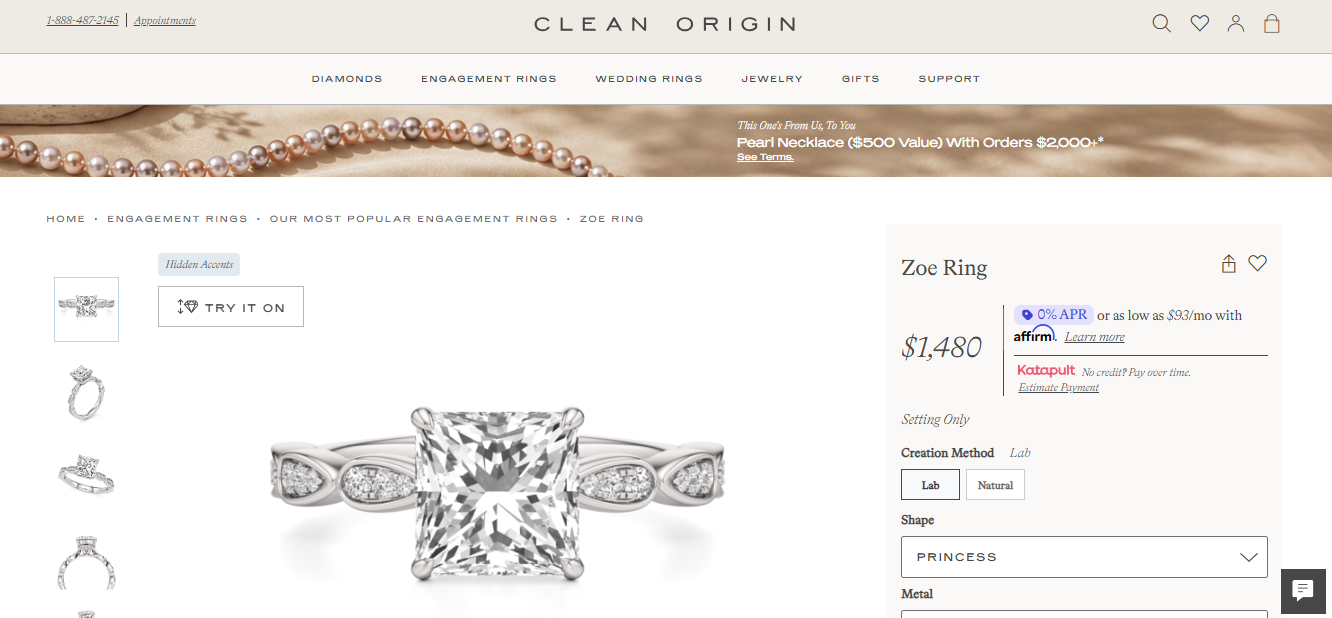
Founded in 2017, Clean Origin focuses heavily on lab-grown diamonds while also offering natural diamond options. It carries a range of princess cut diamonds and engagement ring styles, with vintage-inspired and detailed settings standing out among its designs.
One benefit of choosing Clean Origin is its focus on lab-grown options and customer-friendly policies, including a 60-day return period. The downside is that buyers looking for a large selection of natural diamonds may find fewer options compared to larger marketplaces.
Best for: A buyer who prefers lab-grown diamonds or classic, vintage-inspired ring styles.
6. VRAI
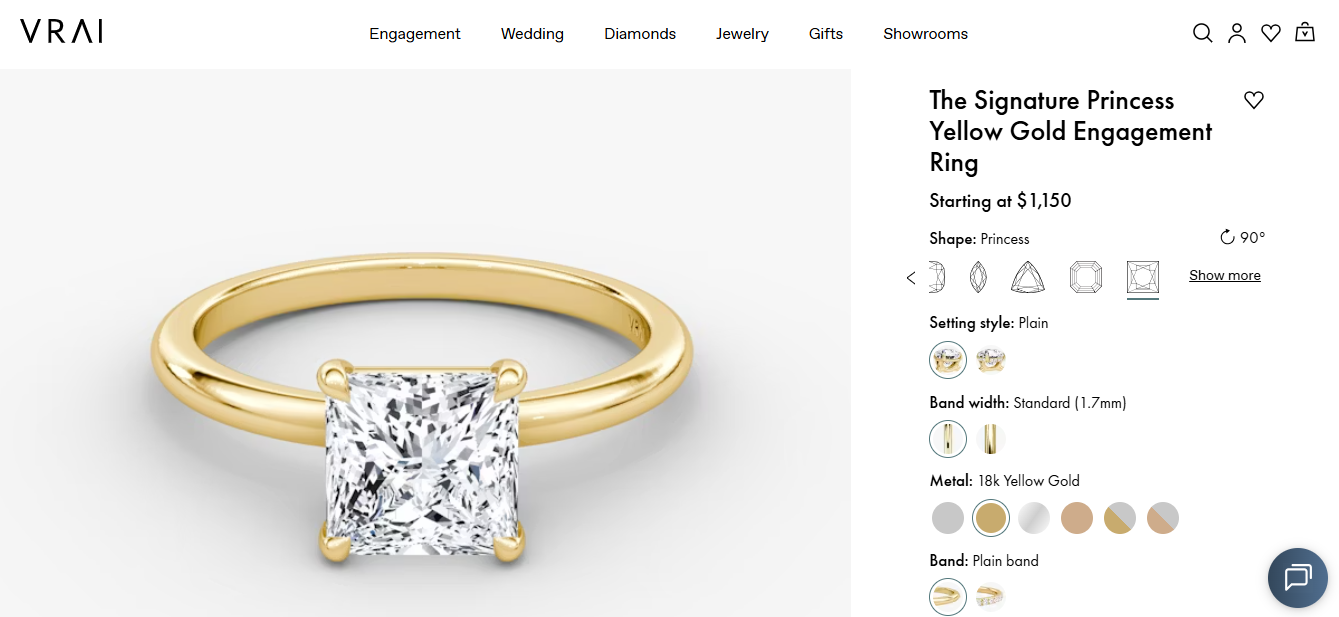
VRAI produces its own lab-grown diamonds using a process designed to reduce environmental impact. Every princess cut diamond it sells is lab-grown, giving buyers a consistent source and a streamlined shopping experience.
One advantage of VRAI is its focus on design and sustainability, but it may not be the best fit for someone primarily shopping for the lowest price. Its diamonds and settings can be more expensive than other lab-grown options, and the company uses its own grading system rather than relying exclusively on third-party grading labs, which some buyers prefer to avoid.
Best for: An environmentally conscious buyer who values brand story, design, and exclusivity.
How to Determine the Quality of a Princess Cut Diamond
As with any diamond, quality comes down to the 4 Cs: cut, color, clarity, and carat. The catch is that grading labs don’t rate fancy cut quality the way they do for round cuts, so it’s up to you to judge whether the cut itself is good. Symmetry and polish are still listed on the report, which helps.
Cut
Diamonds are extracted in their rough state and then cut, and the quality of that cut is what we’re evaluating here. A good cut requires correct proportions, strong symmetry, and a good polish.
For a quality princess cut, the table shouldn’t be too large or too small. Too large and light escapes the diamond; too small and light can’t enter properly. The sides should be cut symmetrically and straight, since uneven or disproportionate edges hurt the stone’s quality. The pavilion should slope gently from the girdle to the culet, since too steep a slope makes the stone look dark and heavy. Ideally, you want to see a balanced “X” shape of light and dark in the center. A diamond with no contrast looks dull.
Color
All colorless diamonds are graded on the same scale regardless of shape, ranging from D (colorless) to Z (yellowish or brown tint). There are also fancy colored diamonds, where color intensity determines value, and these tend to be the most expensive since they’re the rarest.
Expert tip: the highest grades, D, E, and F, cost the most, but G and H are more affordable and still appear colorless to the naked eye. Pairing a G or H diamond with a white gold setting can help it read as more colorless in the ring.
Clarity
Clarity refers to inclusions, meaning tiny particles trapped inside the diamond during formation. More inclusions generally mean lower price and lower quality. Unless you’re buying a flawless diamond, which is extremely rare and expensive, some inclusions are completely normal. Location matters as much as quantity. Fortunately, the princess cut is particularly good at hiding inclusions thanks to its high brilliance.
Expert tip: princess cut diamonds are more prone to chipping if an inclusion sits in one of the four corners. Check the grading report carefully and avoid diamonds with inclusions in the corners.
Carat
Carat refers to a diamond’s weight, not its size, and these are two different things. Generally, the greater the weight, the higher the value.
One advantage of the princess cut is that it appears larger than a round cut of the same carat weight, thanks to its sharp right angles. That means you get more visual size for the same carat weight.
Expert tip: certain carat weights, like 1, 1.5, 2, and 2.5, act as “magic numbers” that cause a stone’s value to jump. A well-cut 0.98 carat diamond looks nearly identical in size to a 1 carat stone but costs meaningfully less.
Weighing the Pros and Cons
The princess cut has a lower cost per carat, hides inclusions well, and appears larger than a round cut of equal weight. On the downside, it’s slightly less brilliant than a round cut, though still quite shiny, and its corners are more prone to chipping.
Princess Cut Diamond Buying Checklist: Cut Quality and Shape
Don’t let anyone tell you a square shape means less sparkle. A princess cut can be just as brilliant as a round diamond when it’s cut well. Here’s what to check:
- Strong symmetry across all facets and edges
- Length-to-width ratio between 1.00 and 1.05, to keep the shape square rather than noticeably rectangular
- A well-proportioned table, not too large or too small, so light enters and reflects properly
- A balanced “X” pattern of light and dark visible in the center when you view the stone face-up
- A pavilion that slopes gently and evenly from girdle to culet, with no bulge
How to Protect Your Princess Cut Diamond Purchase
Once you’ve found a diamond with the right proportions, protect it.
Check the grading report for inclusions in the corners and table, choose a setting built to guard those vulnerable corners, like halo, bezel, or solitaire with prongs, and never skip the grading report itself. It’s your only real guarantee that the diamond arriving at your door is the one you chose.
Get these fundamentals right, and a princess cut can be every bit as stunning and durable as any other diamond shape.